



25 May Adolescent Counseling: Supporting Teens Through Tough Times
Table of Contents
What Is Adolescent Counseling?
Adolescence is a pivotal neurodevelopmental period marked by rapid physical, emotional, and cognitive change. As teens experience identity formation, many face DSM-5–classified mental health challenges that benefit from professional support. Adolescent counseling leverages developmentally informed, evidence-based care to build teens’ resilience. This comprehensive guide explains how teen counseling differs from adult therapy, the leading modalities used in counseling for teenagers, and key steps for finding the right teen therapy.
This guide is designed for parents, caregivers, and teens who want clear, practical information: what adolescent counseling looks like, when to seek help, and how to set realistic expectations for outcomes. Use the sections below to identify the right supports and next steps for your family.


How Does Adolescent Counseling Differ From Adult Therapy?
- Ongoing brain maturation with delayed prefrontal cortex development impacting planning, impulse control, and decision-making
- Social-emotional learning skill-building and peer relationship navigation
- School-related stressors such as academic performance, executive functioning, and social pressures
- Greater sensitivity to environmental and family factors, making engagement and support vital
— Dr. Lena Ortiz, LCSW, Adolescent Mental Health Specialist
Aligned with the American Academy of Child and Adolescent Psychiatry (AACAP), skilled counseling for teenagers blends trauma-informed care, youth development principles, measurable goals, and when appropriate, family/caregiver involvement.
Practical implications include tailoring session structure to shorter attention spans, incorporating school and peer contexts into treatment plans, and setting clear communication routines with caregivers so progress is supported outside the therapy room.
Why Is Early Intervention Crucial in Teen Mental Health?
According to the National Survey on Drug Use and Health (NSDUH), many U.S. adolescents experience mental health disorders—but most do not receive help in time. Timely teen therapy is vital to:
- Stabilize crises, including suicidal ideation, self-harm, or family breakdown
- Leverage neuroplasticity to strengthen emotion regulation and healthy coping
- Reduce risk of co-occurring issues such as substance use, social withdrawal, or declining school performance
- Change a teen’s developmental path, resulting in better long-term health and educational outcomes
When to Seek Immediate Help
If you observe any of the following, seek immediate professional or emergency support rather than waiting for a routine intake:
- Direct talk of suicide, a plan, or intent
- Recent or escalating self-harm behaviors
- Sudden severe withdrawal from all activities and supports
- Signs of psychosis (severe confusion, hallucinations, or delusional thinking)
- Inability to care for basic needs or danger to others
For urgent crises, contact local emergency services, a crisis line, or go to the nearest emergency department. For non-urgent but concerning changes, schedule an expedited consult with an adolescent mental health provider.
What Clinical Issues Does Adolescent Counseling Address?
Licensed adolescent counseling professionals treat a diverse range of challenges:
- Academic Stress: Executive functioning support, study skills, procrastination coaching
- Social Anxiety: Exposure-response work and peer relationship building
- Family Conflict: Family systems therapy to rebuild communication, trust, and boundaries
- Mood Disorders: Cognitive behavioral therapy (CBT) and skills to manage sadness, irritability, or withdrawal
- Gender Identity: Gender-affirming support that’s age-appropriate and family-engaged
- Other: Trauma symptoms, behavioral problems, ADHD, eating concerns, and bullying experiences
| Clinical Issue | Common Interventions |
|---|---|
| Academic/School Stress | Study skills training, organizational coaching, accommodations support |
| Depression & Anxiety | CBT, mindfulness, emotion regulation skills |
| Family Discord | Family therapy, communication exercises |
| Trauma | Trauma-focused CBT, expressive arts therapy |
Which Therapeutic Modalities Work Best for Teens?
Comparative studies highlight several gold-standard modalities for teen counseling. The best approach depends on diagnosis, life context, and engagement style.
- What is DBT and why is it used with teens?
- Can art therapy help traumatized adolescents?
- How does CBT benefit teenagers?
When choosing a therapeutic modality, consider how the teen prefers to communicate (talking, activities, art), the therapist’s training in that modality, and whether family involvement or school coordination is essential for progress. Many clinicians blend approaches to match changing needs.
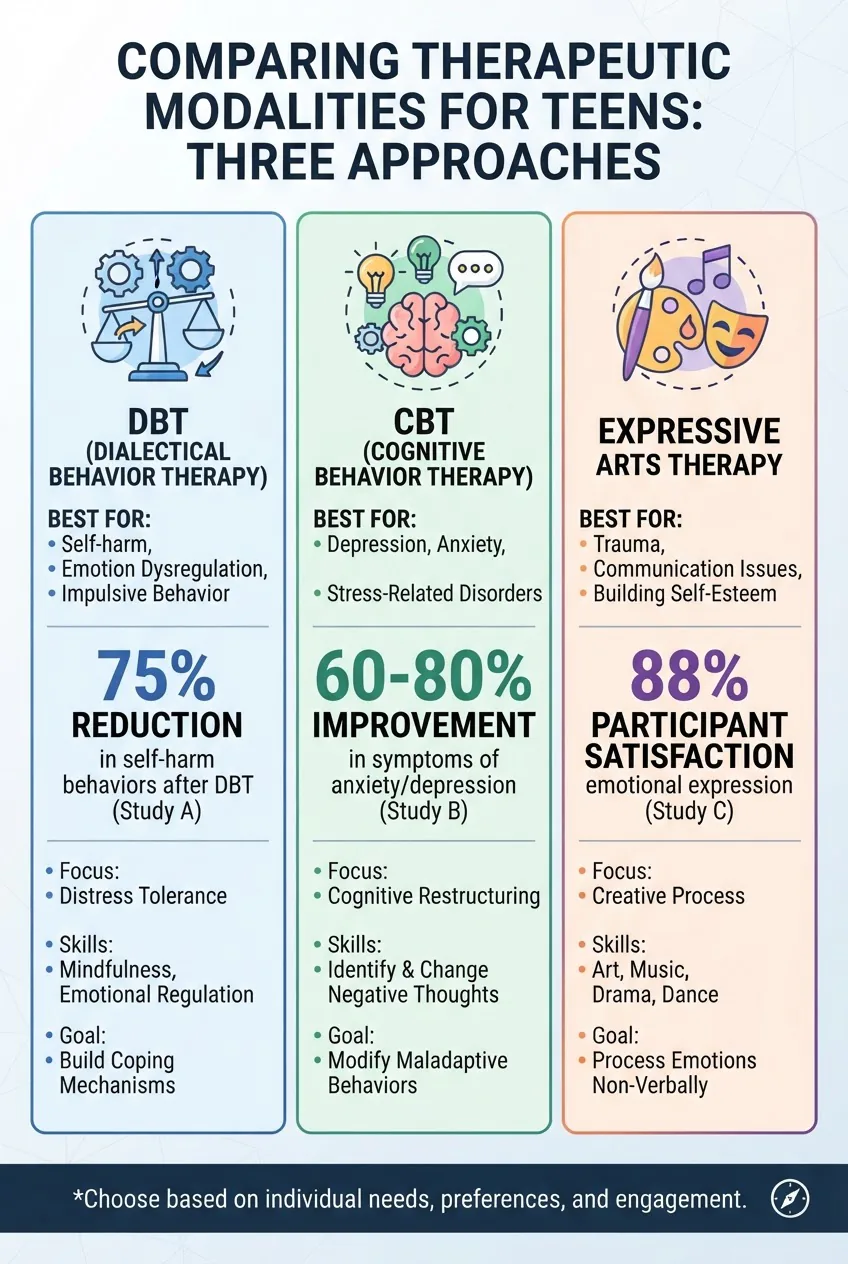
| Modality | Best For | Reported Outcomes |
|---|---|---|
| Dialectical Behavior Therapy (DBT) | Self-harm, emotion dysregulation, impulsivity | Up to 73% reduction in self-harm behaviors |
| Acceptance and Commitment Therapy (ACT) | Anxiety, perfectionism, avoidance patterns | 68% improvement in symptom management |
| Expressive Arts Therapy | Trauma, communication, self-exploration | 82% engagement in therapy process |
— Kayla Greene, MS, Adolescent Therapist
How to Select the Right Teen Counselor
Step-by-Step: Finding an Effective Teen Therapist
- Verify Credentials: Choose a licensed professional with adolescent therapy training (LPC, LMFT, LCSW, or psychologist)
- Assess Specialization: Look for experience with teens and expertise in relevant evidence-based modalities (such as TF-CBT)
- Measurement-Based Care: Prefer therapists who use symptom tracking and clear outcome goals
- Collaboration: Select providers who communicate openly with schools, pediatricians, and families
- Screen Fit and Approach: Schedule a consult to ensure the counselor’s approach aligns with your teen’s needs

Tip: Use the Psychology Today teen therapist directory and filter by insurance, focus area, and therapeutic style. Local families can also use the HHS/SAMHSA locator for Fort Worth and state-wide teen services.
Other practical tips: ask about telehealth options, sliding-scale fees, session length, cancellation policies, and how the therapist handles crises. If insurance is a concern, verify in-network providers and ask the clinic for an insurance verification summary before starting.
What Outcomes Can Families Expect From Counseling?
- Better emotion regulation and healthier daily routines
- Reduced school avoidance and improved academic engagement
- Stronger communication, trust, and attachment with parents or caregivers
- Increased confidence and self-advocacy skills
Progress is tracked using goal-based plans, symptom tracking, and regular family or client updates. Per Harvard’s Center on the Developing Child, quality counseling leads to measurable improvements in emotional and relational health.
FAQ: Adolescent Mental Health Care
What age range does adolescent counseling cover?
Most teen counseling supports ages 12–18. Some programs extend up to age 25, using “emerging adult” frameworks to aid transition to adulthood.
How long does teen therapy usually last?
It depends on needs and complexity:
- Mild issues: 8–12 weekly sessions
- Moderate: 3–6 months of weekly or biweekly therapy
- Severe/high-risk: May require intensive outpatient or partial hospitalization programs
Is counseling confidential for teens?
Yes, but licensed professionals are mandated to breach confidentiality if safety is at risk (e.g., self-harm, risk to others). In Texas, minors age 16+ may access certain mental health services without parental consent (Texas Family Code §32).
How can parents support therapy progress?
Join family sessions when invited, follow home behavior plans, access parent coaching, and coordinate supports with the school as recommended by the therapist.
How do I know if my teen needs professional counseling?
Watch for ongoing mood changes, withdrawal, sharp declines in school performance, or talk of self-harm. Persistent or escalating struggles often indicate a need for teen therapy. Trust your intuition and seek early help.
People Also Ask
- How do I talk to my child about starting therapy?
- Can my teen attend counseling alone, or must I be present?
- What if my teenager refuses to go to therapy?
- How much does adolescent counseling cost in Texas?
- Does insurance cover counseling for teenagers?
Conclusion: The Transformative Power of Teen Counseling
Adolescent counseling is more than crisis management—it’s a bridge to resilience, helping teens develop durable coping and problem-solving skills at a uniquely adaptable stage of life. Whether your child needs DBT, trauma work, or school stress support, professional therapy can redirect even the most challenging paths toward well-being and connection.
Finding support for your teen is a critical step towards healing. The right teen counselor in Fort Worth can make all the difference in your family’s journey.
If you’re unsure where to start, consider a brief consultation with a local adolescent specialist who offers a clear intake process, measurement-based care, and a family-involved plan. Early, collaborative action is the best protection for a teen’s mental health and future development.
Next steps: if you are facing an urgent safety concern, contact emergency services or a crisis line right away. For non-urgent concerns, call to schedule a consult with an adolescent therapist who can outline an intake and treatment plan tailored to your teen’s needs.
Sorry, the comment form is closed at this time.