


04 Dec Blended Families Counseling: Trust, Boundaries, Belonging
Blended-family life holds real potential for deeper connection, but it often requires clear steps, time, and supportive guidance to turn good intentions into everyday reality. This article outlines practical strategies, common patterns, and what counseling at CCFAM looks like in action so you can decide whether to reach out.
At CCFAM, we guide blended families through practical steps toward trust, healthy boundaries, and a shared sense of belonging so the whole household can thrive together.

Merging households brings hope and complexity. Blended family counseling helps you move from tension toward a stronger shared identity by clarifying roles, healing loyalty wounds, and creating routines that honor everyone. Below you’ll find common challenges, practical steps you can try now, and how counseling at CCFAM supports lasting connection and belonging.


What it Looks Like When “Us” Becomes “We”
You’ve merged households, routines, and memories. Maybe one parent remarried, or two families came together under one roof. What once felt simple is now layered: step-siblings learning about each other, step-parents navigating their new roles, loyalties to previous homes, new expectations, and new relationships with extended family. It’s beautiful in potential, but messy in practice.
Many parents in blended families tell us they feel stuck between “how things used to be” and “how things are now.” You want peace and connection with a united family, but you’re navigating role confusion, hurt, and uncertainty. That’s exactly where family counseling at CCFAM can make a difference.
If you’re wondering whether what you’re experiencing is normal — it often is. Naming what’s changing and giving everyone language for those changes reduces isolation and opens the door to repair and new routines.
In counseling, that naming becomes a roadmap: we track patterns, set small goals, and celebrate shifts so everyone can see progress.
Most Common Challenges Blended Families Have
Before change happens, it helps to name what’s hard. Here are some of the things blended families often bring into counseling:
Role confusion & discipline questions
Who does the disciplining? What expectations should a step-parent have of their spouse’s children? Children sometimes feel torn, and step-parents wonder what place they have in the lives and hearts of their new family.
- Loyalty conflicts
Kids may feel guilty for liking their step-parent or worry about being disloyal to a biological parent. Emotions like anger, sadness, and confusion often hover just under the surface. Research shows this is very common.
- Different rules, routines, and parenting styles
When households merge, there are different habits, rules, even values. Without clarity, kids and adults may feel like expectations are constantly shifting.
- Sibling rivalry or sense of “not belonging”
New step-siblings, comparisons, feeling less noticed—it can trigger strong responses. Many blended families struggle here.
Navigating teenage emotions in blended environments can be particularly tough—find support in When Teens Pull Away: How Family Counseling Helps You Reconnect Through the Teenage Years.
Grief, loss, and unmet expectations
There are often losses behind the change: divorce, death, former homes, or traditions ending contribute to the growing pains. Expectations of a “perfect” blended family often collide with reality. When hopes are high, disappointment can hurt deeply.
These challenges are common and treatable; naming them in session creates a shared language that helps families take purposeful steps forward.
Recognizing which challenge feels most urgent helps therapists prioritize work so sessions focus on practical relief as well as long-term change.
How Family Counseling at CCFAM Helps Blended Families Come Together
Blended families can thrive, and counseling supports that in specific, proven ways. Here’s how CCFAM helps you move from tension to unity.
1. Clarity in Roles & Boundaries
We help families define who does what, where authority lies, and how decisions are made. We talk about fair discipline, what each parent or stepparent feels comfortable doing, and how to present a united front to the kids.
Clear roles reduce daily friction and protect children from mixed messages. We create simple, repeatable plans you can use at home.
2. Safe Space for Feelings & Loyalty
Counseling gives children, step-parents, and biological parents a chance to be heard. We validate tough emotions (e.g. sadness, guilt, confusion) without judgment. You learn tools to help kids feel safe expressing love for more than one parent.
When loyalty conflicts are named and normalized, children often relax and show their true feelings more readily.
3. Communication Tools & Conflict Navigation
We teach strategies for being heard without blaming. We can coach you through how to talk when emotions are high, how to listen when you’re hurting, how to repair the damage when someone is wounded. These tools help avoid constant tension and reduce misunderstandings.
Our approach emphasizes practical scripts and repair steps you can practice between sessions.
4. Shared Vision & New Family Identity
Part of the work is helping you create shared family values around what matters most in your home, what beliefs or rituals you want to carry forward (or new traditions you want to create), and relational goals everyone agrees on. A “family identity” helps everyone feel they belong.
Over time these rituals and agreements become the scaffolding for trust and belonging.
New family traditions and connection can be fostered by Family Play Therapy: How Healing Through Play Brings Your Family Together.
What You’ll See Over Time: Phases of Growth
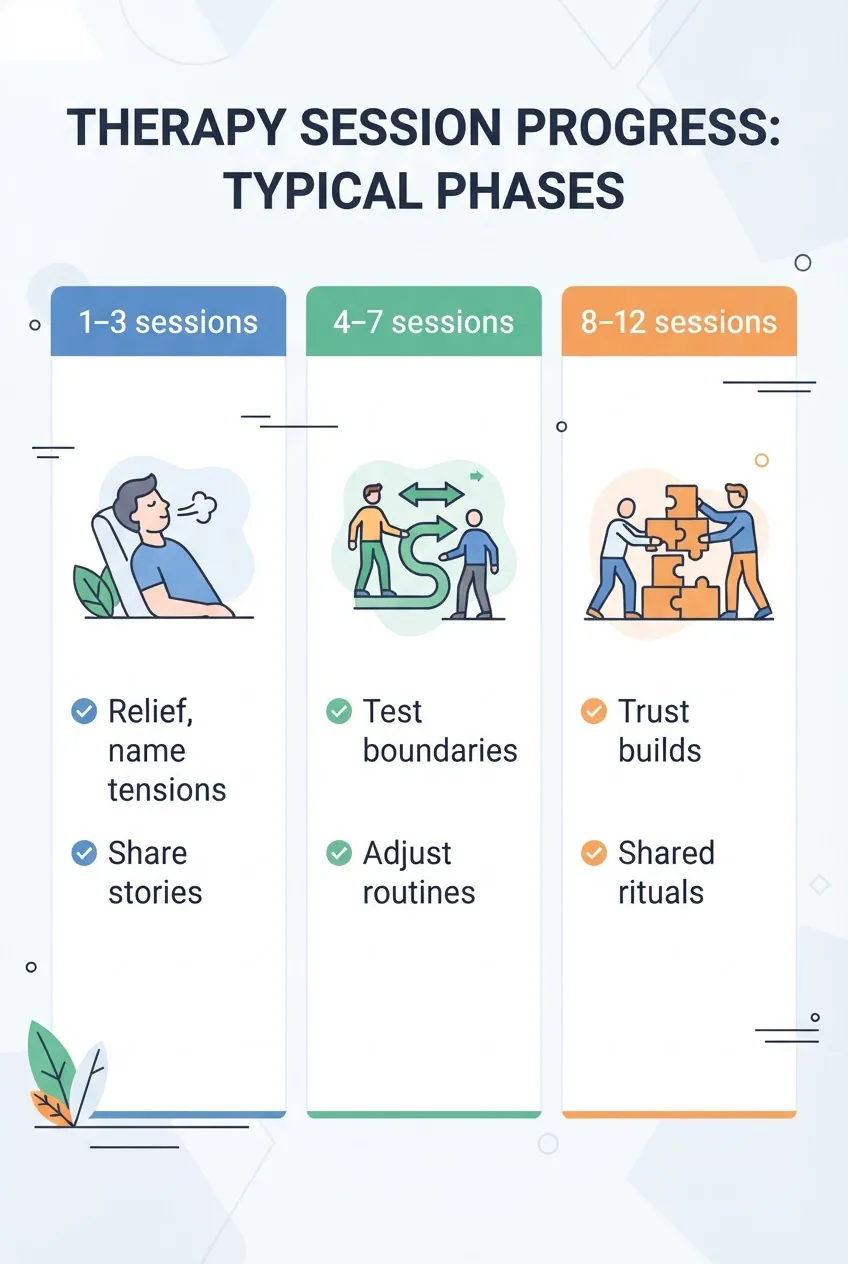
Here’s what many families notice when they commit to blended-family counseling:
Phase
Change You’ll Likely See
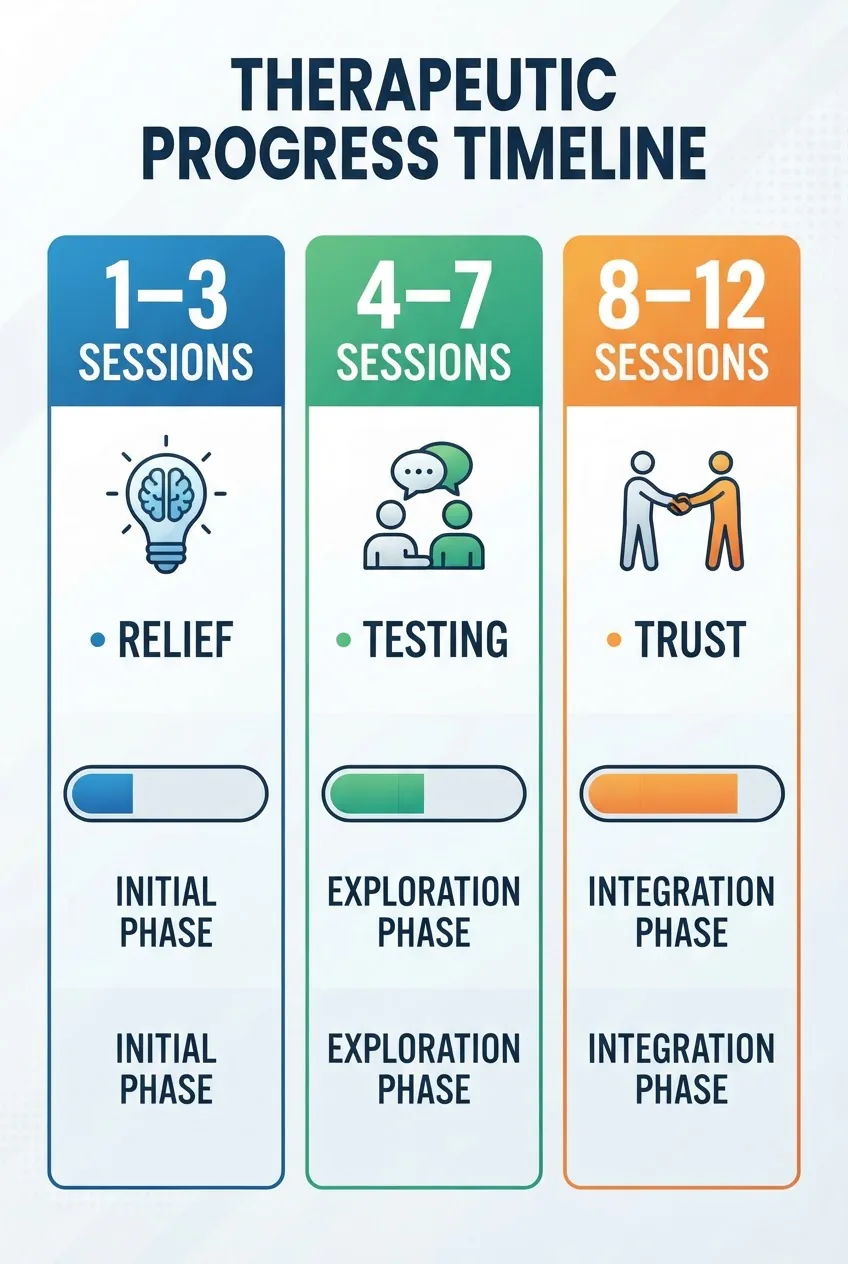
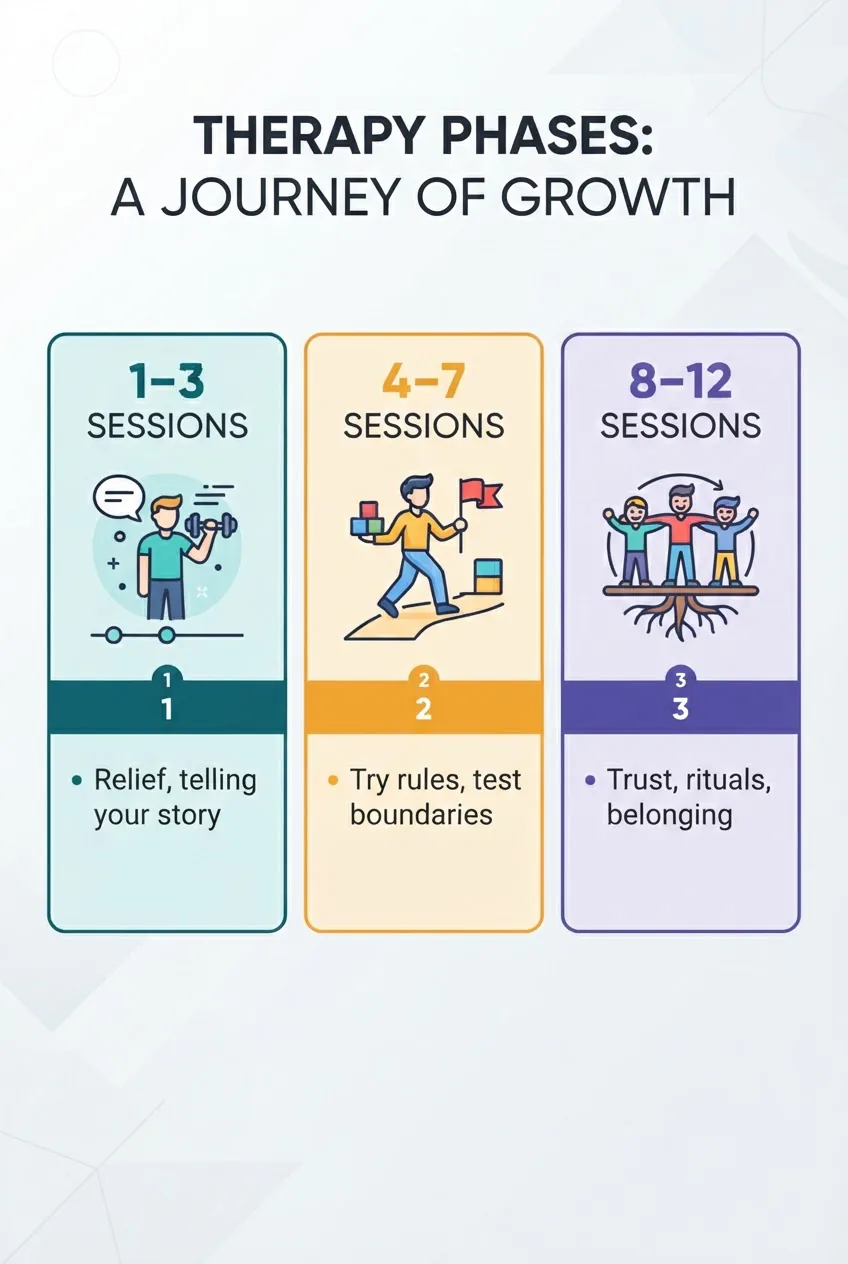
1–3 sessions
Relief in being heard. You begin naming tensions and sharing your stories.
4–7 sessions
Trying out new rules or boundaries. Kids testing what feels safe.
8-12 sessions
More trust between family members. Fewer role dramas. Shared rituals emerge. A stronger sense of team, even across different households.
Each family’s timing is different. Some shift quickly, while others need more space for pain or change. What matters most is consistent effort and open communication.
Practical Steps Parents Can Try Right Now


While counseling works, there are things you can begin doing now:
- Map household routines and responsibilities. Who does which chores, rules, bedtimes? Make them visible and agree on them together.
- Have regular “family check-ins” (weekly or biweekly) to talk about what’s going well and what’s hard. Let everyone, including kids, have voices.
- One-on-one time helps. Biological parents or step-parents spending special time with each child builds trust.
- Be honest about your feelings. If kids sense tension or inconsistency, sharing your struggles (in an age-appropriate way) helps reduce mystery and fear.
- Celebrate small wins. When things go better, even just one less quarrel or one fun meal, notice it and talk about it. These moments build momentum.
Start with small, concrete changes—consistency matters more than perfection. Track what works and bring adjustments to counseling sessions.
Why Blended Family Counseling Is Especially Powerful at CCFAM
What makes our work with blended families stand out?
- We don’t use a one-size-fits-all theory. Our therapists are trained in multiple modalities including family systems, expressive/symbolic work, and parent guidance. That allows us to tailor our work to your family’s unique story.
- Sessions are structured to allow both joint work and separate spaces, so every family member can feel safe speaking honestly.
- We use “intervention levels” (like cleaning up the table/room/house) to help you see progress in tangible steps. Hope grows with small wins!
- Christian worldview integration if you want it: valuing healing, forgiveness, shared faith practices—always optional, always respectful of your beliefs.
- Accessible care: in-person or virtual sessions, flexible scheduling, diversity in life stage, specialties and backgrounds, and supervision so you know you’re cared for by trained and supported therapists.
Our team focuses on practical, measurable progress so hope is tied to real change you can see at home.
A Hypothetical Story: What It Could Look Like for You
Here’s a general sketch (not a specific person’s case) to help you picture the journey:
A couple brings their three children into counseling. Two are from a previous relationship (one living primarily with the biological parent and one moving between houses), plus one child born into the current marriage. In intake, parents share the confusion: rules in one home don’t match rules in the other; kids don’t know what’s expected; children feel unheard when it comes to chores or bedtime.
Over early sessions, the therapist meets with the teens separately and works with parents to clarify shared expectations (bedtime, homework rules) and role of the step-parent. Then family sessions practice these new routines together, work on communication (e.g. asking one child how they feel about rules, “What’s hard for you?”), and set up a shared family ritual, like a weekly movie night or check-in.
By mid-therapy, parents notice fewer battles at bedtime. The child who used to resist rules begins asking what’s expected. The step-parent feels more connected as children respond to them. The family begins to laugh together again, rather than just survive together.
Over time, these incremental changes help the family move from survival to connection—often the outcome families describe when they commit to the process.
When Blended Family Counseling May Be Right for You
You might think about seeking help if:
- You see roles or rules frequently causing arguments.
- A child seems caught between households or feels loyalty conflict.
- Step-parents feel invisible or unsure of what their “job” is in your family.
- Communication is strained: rules are unclear, expectations seem to be shifting, or resentment might be growing.
- You want to build something new, not just manage stress, and grow a sense of belonging and unity.
Bringing It Together: Hope and Action
Blending families isn’t easy, but it can be rich, rewarding, and deeply relational. With intention, openness, and guidance, you can build a home where everyone—kids, step-parents, and parents—feels seen, heard, safe, and valued.
At CCFAM, we believe your family is worth the investment. Healing and connection are possible.
Call our North Fort Worth office to learn more about family counseling for blended families.
Connect with us online to explore which therapist matches your needs.
If you’re ready to begin, calling our North Fort Worth office is a simple first step—our team can help you find the right therapist and plan a path forward that fits your family’s schedule and values.
Looking for deeper restoration and unity? Explore Restore Your Family. Rebuild Your Life..
We’re here to walk alongside your family—small, consistent steps build lasting change. Reach out when you’re ready; the work of belonging and trust is possible with help and hope.
Frequently Asked Questions
What happens in the first session of blended-family counseling?
In the first session we typically take a compassionate history, identify the most pressing concerns, and create immediate, small goals. We also outline a plan for sessions that balances individual and family work.
How long does blended-family counseling usually take?
Timing varies. Many families notice meaningful shifts within 4–7 sessions, while deeper patterns often require 8–12 sessions or more. We focus on measurable changes and practical skills you can use at home.
Will counseling require both parents and children to attend?
We often combine joint family sessions with individual meetings so each person has a safe space to speak. The exact mix depends on your family’s needs and the therapist’s recommendations.
Can faith be part of counseling?
Yes. CCFAM can integrate a Christian worldview when requested, but spiritual elements are always optional and tailored to each family’s beliefs.
How can I prepare before my first appointment?
Think about one or two specific moments that illustrate the challenge, identify goals you’d like to reach, and be ready to share routines and schedules. This helps the therapist create practical next steps quickly.
Sorry, the comment form is closed at this time.