


15 Dec Keeping the Change: How Parents Make Family Counseling Work
Introduction: It’s What You Do Between Sessions That Counts
You may walk out of a counseling session feeling hopeful because of a new understanding, or because you saw a tiny shift in how someone responded. But often, the walls you thought were crumbling feel like they creep back up the next day. And that’s totally normal. Real change comes when the ideas session offers aren’t confined to the therapy room and begin to shape your daily rhythms.
At CCFAM, we believe the work of family counseling lives best where you live: in your conversations, routines, responses to conflict, and even in your smaller moments of connection (the ones no one notices except you). Let’s explore some simple, practical ways parents can help keep that relational change alive at home.
Incorporating creative approaches, such as those described in Family Play Therapy: How Healing Through Play Brings Your Family Together, can make healing both effective and fun for the whole family.
Those small session insights become meaningful when translated into everyday habits; the suggestions below are designed to be realistic, flexible, and sustainable for busy families.

4 Everyday Tools Parents Can Use to Keep Growth and Momentum Going
These aren’t fancy therapy tricks! They’re just grounded, doable strategies that reinforce change and help relationships shift gradually but meaningfully.
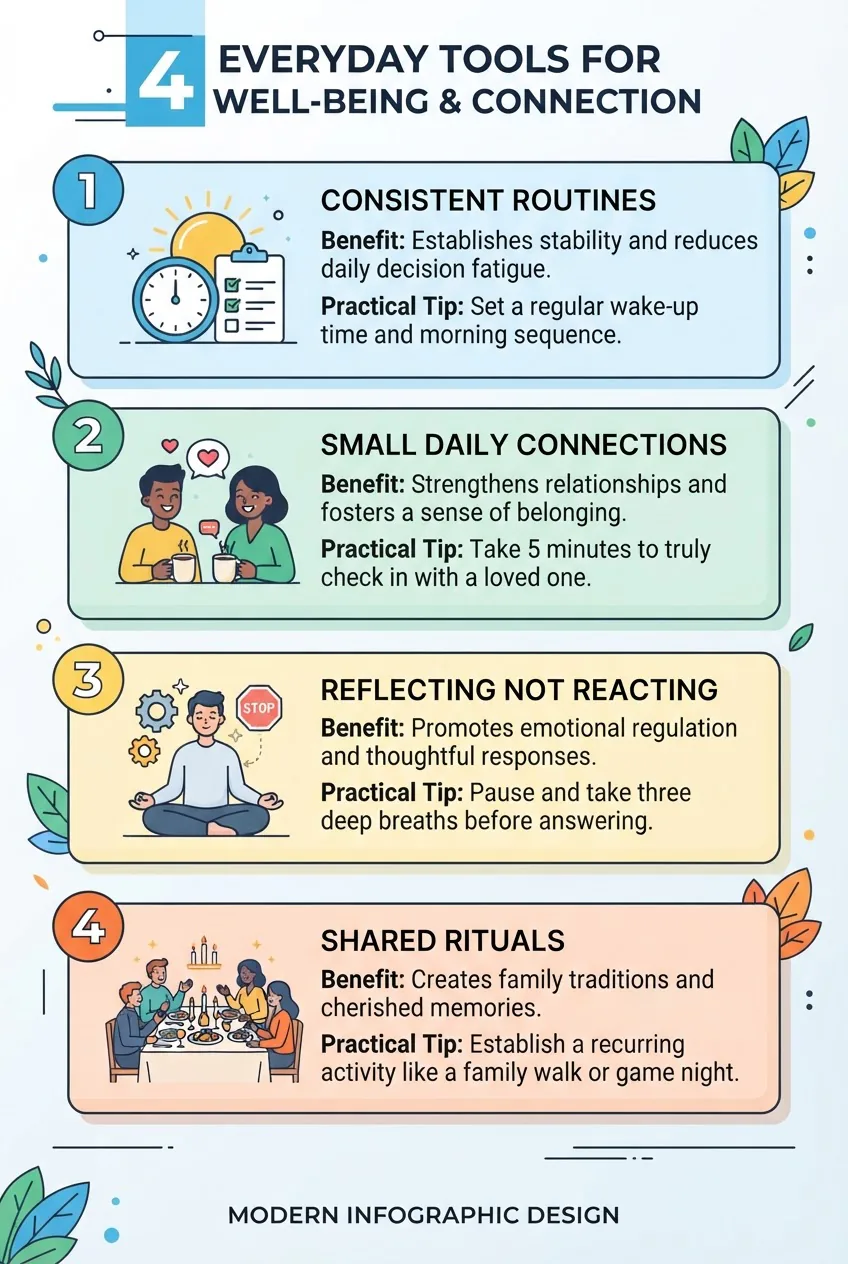
- Consistent Routines & Predictability
Younger kids and teens alike thrive when home feels stable. When routines for meals, bedtime, chores, or check-ins happen regularly, everyone relaxes a little more. Predictability helps build safety, making it easier to practice new ways of talking or listening.
- Small Daily Moments of Connection
Where and how can you get 10 minutes of one-on-one time? Maybe it’s the drive to school, talking during a walk, reading together, or doing something fun without screens. These moments, though short, build trust. They make “I heard you” feel real.
- Reflecting, Not Reacting
When conflict arises—a snappy comment, a slammed door—pause. Reflect on what just happened: “I saw you got upset when I spoke quickly.” Or “You’re angry because you were hoping to play right now.” These reflections (by parent or child) open space for understanding, not just defensiveness. - Using Shared Rituals to Reinforce Values Rituals are shared habits: perhaps family dinners, gratitude moments, a weekly family check-in, or even a bedtime ritual where each person shares one thing they appreciated that day. These help anchor values like respect, kindness, forgiveness, and they matter.
What Research & Best Practices Say
- Studies show that parent involvement in child and family therapy greatly improves the chances that behavior changes stick, and that the child feels more supported. Parents who regularly check in with the therapist, follow up on goals, and practice strategies at home see stronger results.
- Experts in play therapy and systemic approaches emphasize that “home practice” (i.e. implementing small strategies outside of counseling sessions) helps normalize what’s been learned, creating a foothold for lasting change over time.
- A therapeutic alliance means a real connection of trust, safety, and shared goals with your therapist. When parents, children, and the therapist build that bond, therapy tends to work better. As you begin to see small shifts at home, your confidence in the process grows. That trust makes it easier to try new ways of relating, and those changes reinforce the alliance itself.
What That Looks Like at Home: A Parent’s Routine Example
Here’s a sketch of how a parent might put these tools into practice over a week:
- Sunday night check-in: After dinner, go around the room and each person shares “one thing I’m worried about this week” and “one thing I hope for.”
- Daily connection slots: After school, spend 20 minutes doing something your child picks—Legos, drawing, or playing a game
- Conflict resolution: When someone gets upset, later (not in the heat of the moment) say: “I noticed when things got tense about homework, I felt frustrated. I need to ask forgiveness for my tone and speak differently next time.”
- Weekly ritual: This could be movie night, board games, or gratitude sharing; something that’s dependable and fun.
Over time, these practices become habitual. They help translate therapy “tools” into relationship-strengthening features.

How Parents Can Navigate Challenges
Practicing change at home is not always smooth. Here are a few common bumps and ways to move through them:
- Feeling discouraged if there are setbacks. This is part of change. Even small slips are chances to practice repair.
- Time & consistency challenges: Life is busy, schedules conflict. The trick is starting small and building gradually.
- Resistance from kids or teens: Sometimes they don’t want to talk or feel embarrassed to spend time together. Stay curious. Try small invitations rather than pushing. Invite them into the process rather than dictating it.
- Parent fatigue: You may feel drained. Reminding yourself why the work matters and asking for support from your therapist, spouse, or friend are essential as you and your family strive for lasting change.
How This Boosts Your Therapy Momentum
- When changes happen only in sessions, they tend to be situational. But when parents bring strategies into daily life, they become relational: how you are with each other becomes softer, safer.
- These everyday practices build trust. Kids see your effort to be present, to listen to them, to repair your relationships, and to build a better future in your family…and that matters deeply.
- You begin to see shifts: less conflict, more calm moments, more laughter, more feeling like “we’ve got each other.”
If you are facing challenges with your adolescent, When Teens Pull Away: How Family Counseling Helps You Reconnect Through the Teenage Years offers insights tailored for navigating teenage disconnect.
Bringing This into Your Relationship with CCFAM
At CCFAM, we partner with you in more than just session work:
- Your therapist will help you pick out a few manageable tools to implement at home as part of your treatment plan.
- We offer parent guidance sessions so you have space to ask questions, process what’s happening, and get support for those in-between times.
- We encourage checking in, feedback, and small “home assignments” as gentle opportunities to practice and get guidance.
Let’s Make Every Day Count
Change doesn’t have to wait for session day. It begins the moment you decide to notice, try something slightly different, and lean into a more intentional family relationship.
If you’re ready to learn tools that carry beyond therapy into every mealtime, bedtime, argument, and shared laugh, CCFAM is here for you. Call our North Fort Worth office or connect online to explore Family Counseling, and let’s build the bridge between healing in sessions and belonging at home.
For more support and further transformation, visit our guide to Restore Your Family. Rebuild Your Life.
Schedule a consultation to start turning session insights into everyday changes that last.
Sorry, the comment form is closed at this time.