

31 May Group Play Therapy: How It Helps Kids Build Social Skills
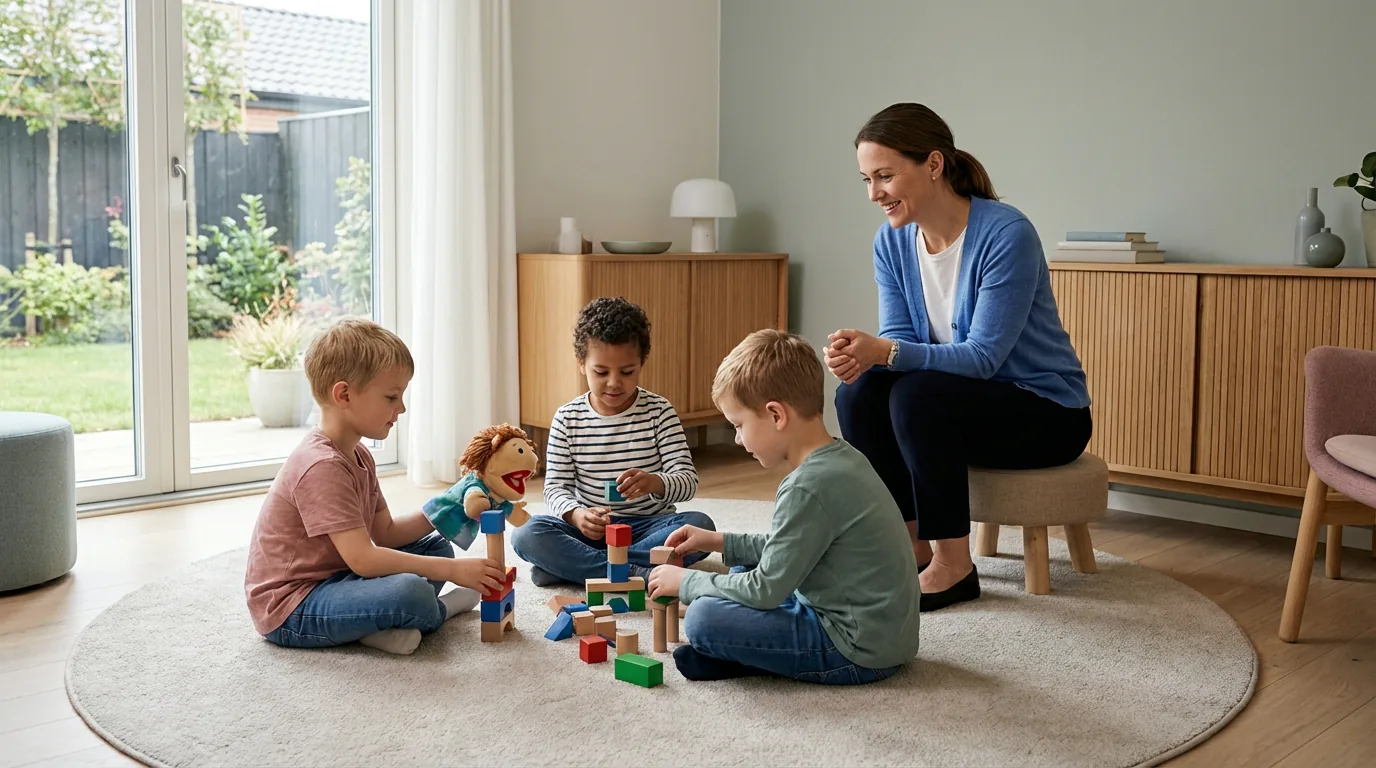
Group play therapy offers kids an excellent opportunity to learn and practice essential social skills in a supportive environment. For families seeking specialized services, play therapy fort worth provides a safe space where children can develop communication, empathy, and problem-solving abilities. Group play therapy is an evidence-based, developmentally informed intervention that uses peer-mediated learning to build core social-emotional skills. Unlike individual therapy, this child-centered group approach relies on structured play modalities endorsed by the Association for Play Therapy (APT) to promote prosocial behavior. This guide explains how play therapy for siblings and specialized sibling therapy techniques can produce measurable gains in emotional co-regulation and conflict transformation. For families seeking more specialized approaches, exploring sibling play therapy services in Fort Worth can provide additional support tailored to complex family dynamics.
This article summarizes how group play therapy works, the specific benefits for siblings, common techniques therapists use, and practical considerations for families and clinicians. Read on for evidence-informed guidance and actionable next steps for finding the right group for your child.
How Does Group Play Therapy Differ From Traditional Social Skills Training?
Contemporary group play therapy applies clinical methods that are distinct from standard social skills programs:
| Standard Social Skills Training | Evidence-Based Group Play Therapy |
|---|---|
| Didactic instruction | Experiential, play-based learning |
| Adult-directed activities | Child-initiated peer interactions |
| Artificial scenarios | Naturalistic play observation and intervention |
Research comparing group play therapy to more traditional, didactic programs typically finds stronger generalization of skills learned through play-based, naturalistic experiences. These findings suggest that children in play-based groups are often better able to transfer social and emotional skills into everyday settings.
What Neurodevelopmental Benefits Does Group Play Therapy Offer?
Research from UCLA’s child development programs indicates several neurodevelopmental advantages associated with cooperative play:
- Increased mirror neuron engagement during collaborative activities
- Enhanced prefrontal cortex connectivity fostered by structured turn-taking
- Strengthening of social-emotional neural networks through synchronized play sequences
These skills extend beyond the group setting, empowering children to handle real-life challenges. In sibling relationships, resolving conflicts through play can be a powerful tool to foster understanding and healthier interactions at home.
Why Is Play Therapy Particularly Effective for Siblings?
Play therapy for siblings takes advantage of the existing dyadic relationship to target relational dynamics and promote healing. Typical outcomes include:
- Attachment repair using Theraplay®-informed interventions
- Conflict de-escalation through Filial Therapy techniques
- Emotional attunement developed via co-created sandtray narratives
These sibling-focused techniques can be applied when criteria for sibling relational problems (V61.8) in the DSM-5-TR are met, helping clinicians align interventions with diagnostic and treatment planning.
What Specialized Techniques Enhance Sibling Group Therapy?
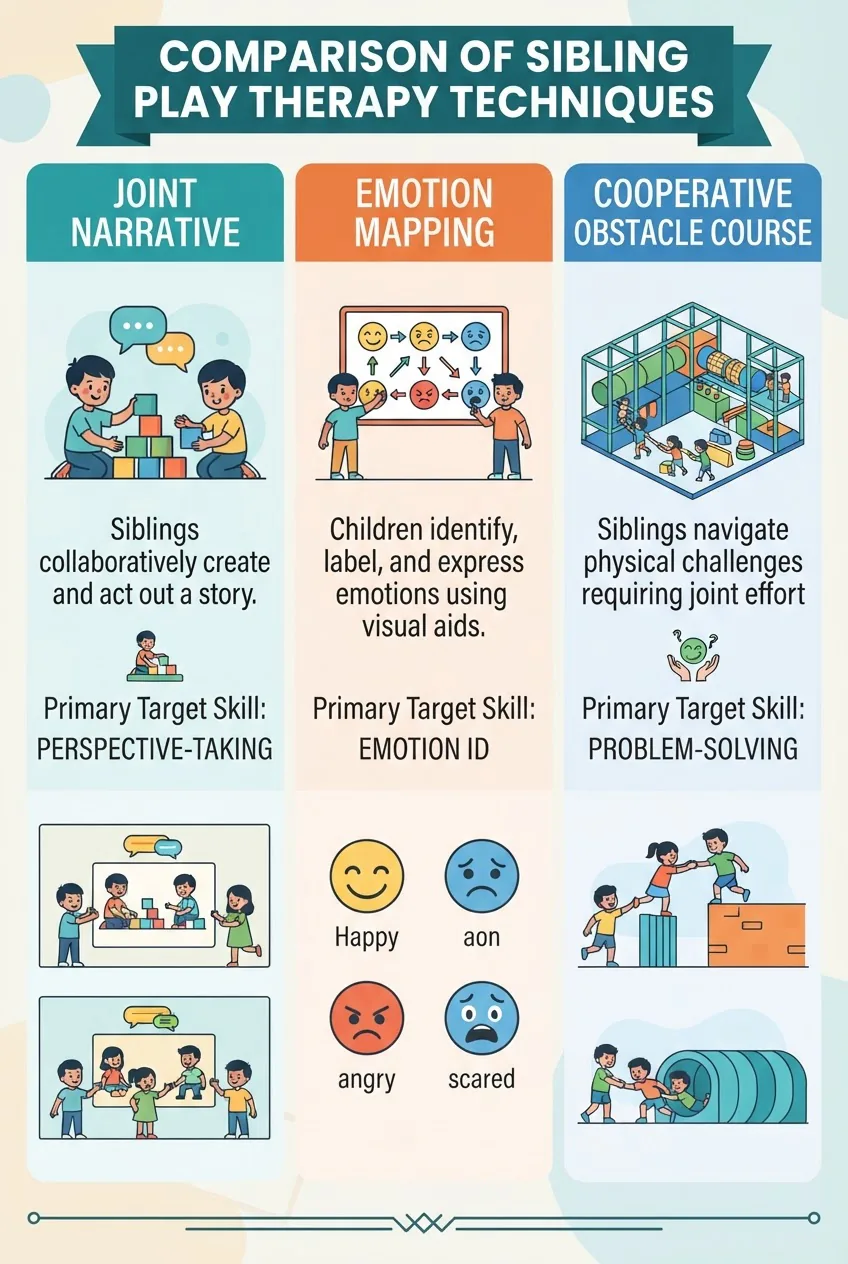
Registered Play Therapists (RPTs) commonly use the following evidence-informed techniques:
- Joint narrative construction using therapeutic puppets to practice perspective-taking and turn-taking
- Emotion mapping informed by Plutchik’s Wheel to help children identify and label feelings
- Cooperative obstacle courses that emphasize nonverbal communication, problem-solving, and mutual support
How Does Group Play Therapy Address Diverse Developmental Needs?
Effective groups are intentionally designed to meet a range of developmental and cultural needs by incorporating:
- Differentiated instruction to match varying social skill levels
- Culturally responsive play materials and themes
- Trauma-informed group composition and facilitation strategies
The American Group Psychotherapy Association recommends groups of 4–6 children with similar developmental profiles to optimize engagement and therapeutic benefit (AGPA).
What Challenges Might Arise in Group Play Therapy?
Common clinical considerations include:
- Uneven participation across group members, requiring active therapist mediation
- Variable cultural interpretations of play behaviors that affect meaning-making
- Transferring skills learned in sessions to home and school settings (skill generalization)
Therapists often address these challenges with clear group rules, scaffolding to invite quieter children into play, caregiver coaching to reinforce skills at home, and periodic coordination with teachers to support school-based generalization.
FAQs: Expert Insights on Group Play Therapy
1. What’s the ideal age range for group play therapy?
Group play therapy is typically most effective for children aged 4–12 years, a period of high neural plasticity that supports social learning (see resources from the Yale Child Study Center).
2. How long until observable improvements emerge?
Many children show measurable progress within 8–12 sessions, though more complex relational or developmental concerns may require ongoing work over several months.
3. Are sibling therapy techniques covered by insurance?
Insurance coverage varies, but many ACA-compliant plans reimburse for group therapy under CPT code 90853 when delivered by a licensed clinician. Families should confirm coverage with their provider and the treating clinic.
Conclusion: The Transformative Power of Group Play Therapy
Group play therapy offers a neurodevelopmentally grounded pathway for building social competence and emotional intelligence. Through sibling-focused play work and targeted techniques, children can develop durable relational skills in an engaging, developmentally appropriate environment. Families considering this approach should consult with an APT-certified play therapist; learn more about play therapy standards from the Association for Play Therapy.
Explore additional resources from the APA’s clinical guidelines or the NIH literature review for further reading.
If you’re ready to take next steps: ask potential providers about group composition, therapist credentials (look for RPT or APT-affiliated training), how caregivers are involved, and whether there is a plan for skills generalization to school and home. A brief intake conversation can clarify fit and expected outcomes for your child.
Sorry, the comment form is closed at this time.