


30 May Filial Play Therapy: Benefits for Families and Caregivers
Filial play therapy (FPT) is a parent-mediated intervention that uses attachment-based, therapeutic play to strengthen family relationships. Rather than relying on traditional talk therapy, this research-supported approach trains parents to use structured play skills grounded in child development and attachment theory. With therapist guidance, caregivers learn practical tools for attunement, co-regulation, and limit setting that can reshape day-to-day interactions. For an overview of how play therapy supports development, see the American Psychological Association’s CE Corner on play therapy here. Parents interested in learning more about this approach may find our detailed Filial Play Therapy: A Guide for Parents a helpful starting point.
This article expands on core benefits, practical techniques, and how filial play therapy fits into modern family life. It highlights evidence-based outcomes, typical session structure, and guidance on choosing a credentialed clinician so caregivers can decide whether FPT is a good match for their family.
This article is written for caregivers, clinicians, and early childhood professionals seeking practical, evidence-informed steps. You’ll find clear descriptions of session formats, everyday practice recommendations, common challenges and troubleshooting, and suggested questions to ask when evaluating a provider.


How Does Filial Play Therapy Differ From Standard Parenting Approaches?
Originally developed by Dr. Bernard Guerney at Pennsylvania State University, filial therapy integrates Rogerian (person-centered) principles with play-based methods to create a parent-as-therapist model. Where conventional parenting often leans on instruction and behavior management, FPT emphasizes connection and emotional understanding through:
- Non-directive play protocols: Parents learn core skills such as tracking, reflective responding, and concise limit setting.
- Emotional scaffolding: Support is tailored to the child’s needs within Vygotsky’s zone of proximal development (ZPD overview).
- Developmentally informed limits: Boundaries are taught using approaches like Landreth’s ACT model (Acknowledge the feeling, Communicate the limit, Target an alternative) and an understanding of behavior patterns informed by the DSM-5 (DSM-5).
Because parents are the primary agents of change in this model, gains made in sessions are intended to generalize quickly to everyday family routines. Therapists typically provide live coaching, role-play, and video feedback so caregivers build confidence and consistency in using skills outside of formal sessions.
What Are the Evidence-Based Benefits of Filial Therapy?
Research reported in peer‑reviewed journals suggests that caregiver-led play interventions can improve attachment, emotional regulation, and family functioning. Examples include: For deeper insight into relationship enhancements, explore our article on How Filial Play Therapy Strengthens Parent-Child Relationships.
Clinical studies and program evaluations commonly report improvements on standardized parenting and child outcome measures, including reduced behavior problems, increased parental warmth and sensitivity, and better emotional vocabulary among children. While individual results vary, consistent practice of filial skills is associated with larger, more durable gains.
Across controlled studies and program evaluations, common findings include improved parent responsiveness, fewer reported behavioral incidents, and gains in children’s ability to identify and express feelings. These outcomes tend to be strongest when caregivers receive ongoing coaching and practice regularly in naturalistic settings.
1. Enhanced Attachment Security
Studies using the Strange Situation paradigm have found higher rates of secure attachment among families participating in parent–child play therapy, likely due to increased caregiver sensitivity and attunement (Strange Situation overview). Parents build these skills through:
- Training in recognizing and reflecting micro-expressions and cues
- Co-regulation exercises inspired by emotion coaching methods (see an introduction from the Gottman Institute here)
Over time, children who experience more sensitive responding and emotionally attuned play often demonstrate fewer avoidance strategies and greater trust in caregiver support during stress.
2. Trauma-Responsive Support
Caregiver-mediated interventions are central to healing after adversity. In filial therapy studies, families have reported reductions in trauma-related symptoms and gains in emotional literacy. For context on adverse childhood experiences (ACEs) and why caregiver involvement matters, see the National Child Traumatic Stress Network’s overview here. Related outcomes are often measured with tools like the BASC‑3 (Behavior Assessment System for Children).
Filial methods intentionally prioritize safety, predictability, and validation—core elements of trauma-informed care. When therapists guide caregivers to respond with attunement rather than punitive discipline, children can begin to reprocess frightening or dysregulating experiences within a supportive relationship.
Which Filial Therapy Techniques Yield Optimal Outcomes?
Guidance from professional organizations such as the Association for Play Therapy underscores the value of consistent, child-led practice with caregiver coaching (APT evidence-based practice statement).
1. Child-Led Play Sessions
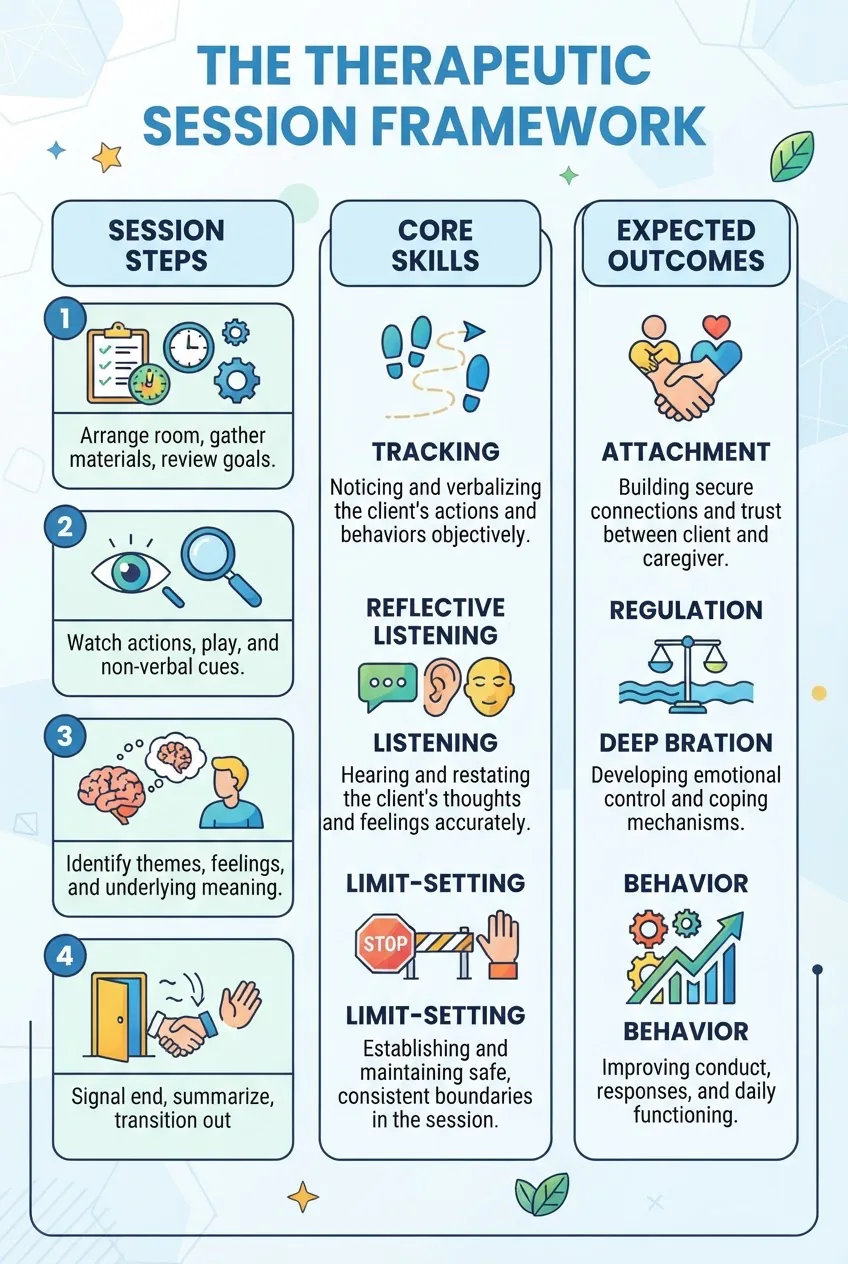
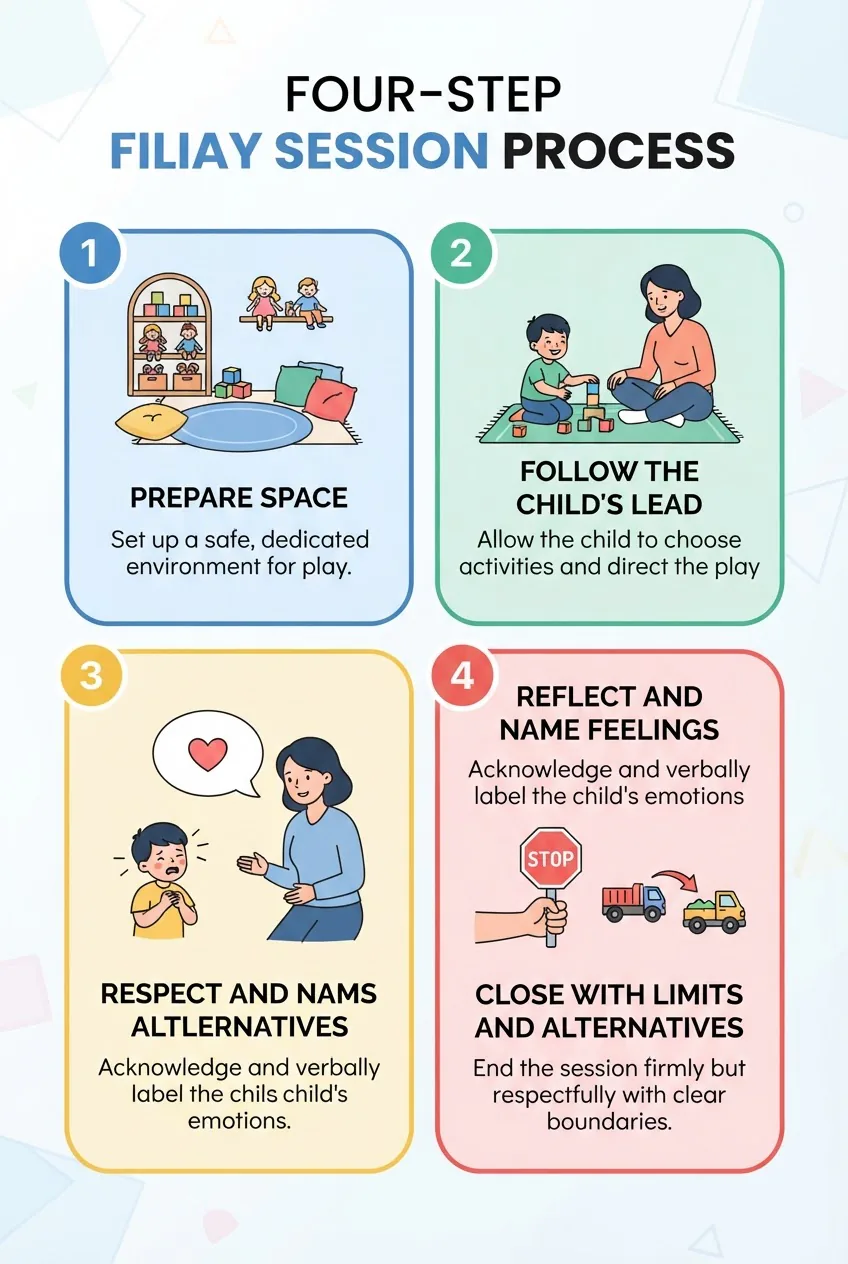
Parents implement a structured, child-led format based on Guerney’s principles:
- Prepare a simple, predictable play space with a curated set of expressive toys.
- Begin with non-interfering observation to follow the child’s lead.
- Use tracking and emotion mirroring to reflect content and feeling in the play.
- Close with a brief reflection; set clear, calm limits only when necessary and offer acceptable alternatives.
Regular, short practice sessions—often 20–30 minutes several times per week—help families integrate these routines into daily life without overwhelming caregivers. Therapists commonly recommend keeping a brief log of sessions to monitor progress and troubleshoot challenges.
2. Reflective Listening Drills
Adapted from Carl Rogers’ person-centered approach, parents practice concise reflections that convey understanding:
- Content reflection (“You’re making the doll say…”) to track the child’s narrative
- Affect reflection (“That feels really frustrating”) to validate emotional experience
Simple visual tools like “feeling faces” can support emotion identification for younger children (examples from Vanderbilt’s CSEFEL resources are available here).
These drills are typically practiced in supervision with the therapist providing corrective feedback and modeling—helping caregivers move from directive problem-solving to reflective presence.
Finding a Qualified Filial Therapist
When seeking a clinician, ask about specific filial training, experience with parent coaching, and comfort working with your child’s age and presenting concerns. Useful questions include:
- How much supervised experience do you have training caregivers in filial methods?
- Do you offer live coaching, video feedback, or in-session role-play for parents?
- Can filial techniques be adapted to telehealth, and how do you support families between sessions?
Also check licensure (LPC, LMFT, LCSW, or Psychologist) and whether the provider holds play therapy certifications such as the Association for Play Therapy’s Registered Play Therapist credential. Practical details—session length, homework expectations, and insurance or sliding scale options—are important to clarify up front.
How Does Filial Therapy Address Modern Parenting Challenges?
In the context of today’s family life—documented in Pew Research Center’s report, Parenting in America Today (2023)—FPT offers practical, relationship-focused solutions.

| Challenge | FPT Solution |
|---|---|
| Screen time overload | Regular unplugged play sessions rebuild attention, empathy, and connection |
| Behavioral power struggles | Calm, consistent limit-setting frameworks reduce escalation and reinforce boundaries |
| Emotional dysregulation | Co-regulation routines and reflective responding help children name, tolerate, and manage big feelings |
Caregivers often report that making time for short, predictable play windows creates structure that supports reduced conflict and a calmer household overall. For families facing logistical barriers, many clinicians adapt filial methods into telehealth-friendly formats.
Conclusion: The Future of Attachment-Based Interventions
As a collaborative, attachment-based approach, filial play therapy equips parents with actionable skills that can prevent problems and enhance resilience. Many clinicians now offer secure telehealth adaptations consistent with APA’s telepsychology guidance (see guidelines), making FPT more accessible for today’s families.
One of the distinct advantages of filial play therapy is that it equips parents with the skills and confidence to better support their children’s emotional development. To further support your child’s growth, consider the benefits of professional play therapy counseling as a complementary approach.
For caregivers considering this approach, a brief consultation with a licensed clinician trained in filial methods can clarify goals, expected timelines, and how to incorporate sessions into family routines. When chosen thoughtfully and practiced consistently, filial play therapy offers a practical path to stronger, more attuned relationships.
Practical next steps: schedule a 15–30 minute consultation to review your child’s needs, ask about the clinician’s filial training and coaching format, and request a sample session agenda. Small, sustained changes in daily interactions often produce meaningful improvements in attachment and regulation.
References
- American Psychological Association. CE Corner: Play therapy—A clinical tool for children. APA
- Association for Play Therapy. Evidence-Based Practice Statement. AFPT
- National Child Traumatic Stress Network. Adverse Childhood Experiences (ACEs). NCTSN
- Pew Research Center. Parenting in America Today (2023). PWC
- American Psychiatric Association. Diagnostic and Statistical Manual of Mental Disorders (DSM-5). psychiatry.org
FAQs: Evidence-Based Answers
1. How does filial therapy compare to PCIT for ADHD?
Both FPT and Parent–Child Interaction Therapy (PCIT) are effective, caregiver-focused models. PCIT’s structured coaching often produces rapid behavior change, while filial approaches are frequently chosen to deepen emotional regulation and attachment. The best fit depends on your goals and your child’s needs; learn more about PCIT here.
2. What credentials should a filial therapist hold?
Look for a licensed clinician (e.g., LPC, LMFT, LCSW, Psychologist) with specialized training in filial methods. The Association for Play Therapy’s Registered Play Therapist credential indicates advanced play therapy competence (APT). Many providers also complete Child‑Parent Relationship Therapy (a filial model) training through programs such as the University of North Texas Center for Play Therapy (training information).
Sorry, the comment form is closed at this time.