



18 May Play Therapy Science: Evidence & Neurobiology for Kids
Developmentally grounded play therapy for children is a neurobiologically informed intervention that uses children’s natural modes of expression. Unlike many adult talk therapies, child-centered play therapy works through symbolic and sensory channels, making it especially effective for addressing preverbal trauma and attachment disruptions. This analysis outlines the polyvagal theory foundations of play therapy, compares common therapeutic approaches, and offers DSM-5–aligned treatment considerations.
By understanding the neurological and emotional mechanisms at play, parents can better appreciate how play therapy helps children express themselves and process difficult feelings in a safe environment.
This article summarizes the core neurodevelopmental principles, practical techniques, and clinical considerations that guide play therapy delivery in pediatric settings. It is intended for parents, clinicians, and allied professionals seeking a concise, clinically grounded overview and practical next steps.
What Makes Play Therapy Developmentally Unique?
The Association for Play Therapy (APT) and developmental neuroscience emphasize that play therapy aligns with how young brains process experience. Key developmental features include:
- Right‑brain and limbic engagement: Play activates emotional and relational processing systems before verbal, logical language fully develops.
- Sensorimotor integration: Tactile, movement, and sensory experiences are combined with affect regulation to support embodied processing and learning (see recent pediatric research).
- Nonverbal symbolic processing: Through metaphor and symbolic play, children can express and reorganize implicit memories without relying on explicit verbal recall.
In practice, these developmental principles translate into clinician behaviors and room design: offering a range of sensory-rich materials, following the child’s lead while providing gentle containment, using play-based metaphors to scaffold meaning, and pacing interventions to match the child’s regulation level. These adaptations help clinicians meet children where they are developmentally rather than imposing adult-centered therapeutic formats.
Polyvagal Theory and Play Therapy
Polyvagal theory offers a framework for understanding how autonomic regulation affects social engagement and safety cues in play-based work. By creating a safe, co-regulatory relationship, therapists can help children shift out of defensive autonomic states and access social‑engagement systems that support learning and healing. For a primer on the theory, see resources from the Polyvagal Institute.
Applied to play therapy, the polyvagal lens emphasizes the importance of therapist tone, facial expressivity, and interactive rhythm in cueing the child’s nervous system toward ventral vagal (social engagement) states. It also recognizes the common patterns of sympathetic mobilization (fight/flight) and dorsal vagal shutdown (freeze) in trauma-exposed children, and suggests graded, predictable activities and co-regulation as pathways back to safety and exploration.
4 Evidence-Based Play Therapy Techniques
Several play-based protocols have empirical support in U.S. clinical practice and research. The following descriptions summarize commonly used, validated approaches:
- Theraplay® protocols: Attachment-focused, activity-based interventions that improve parent–child synchrony and increase opportunities for positive affective repair.
- Trauma‑focused sandtray: A nonverbal, symbol-based modality shown to reduce trauma-related symptoms by allowing children to externalize and reorganize difficult material.
- Expressive art sequencing: Structured creative activities (e.g., drawing, movement, bilateral stimulation) that enhance emotional literacy and integration.
- Filial therapy models: Parent‑implemented therapeutic techniques that train caregivers to use play as a corrective, reparative interactional strategy at home.
Clinicians typically select and sequence these techniques according to the child’s regulation capacity, attachment needs, and treatment goals. Fidelity to model-specific protocols and careful progress monitoring (session goals, behavioral observation, and caregiver feedback) support better outcomes across diverse clinical presentations.
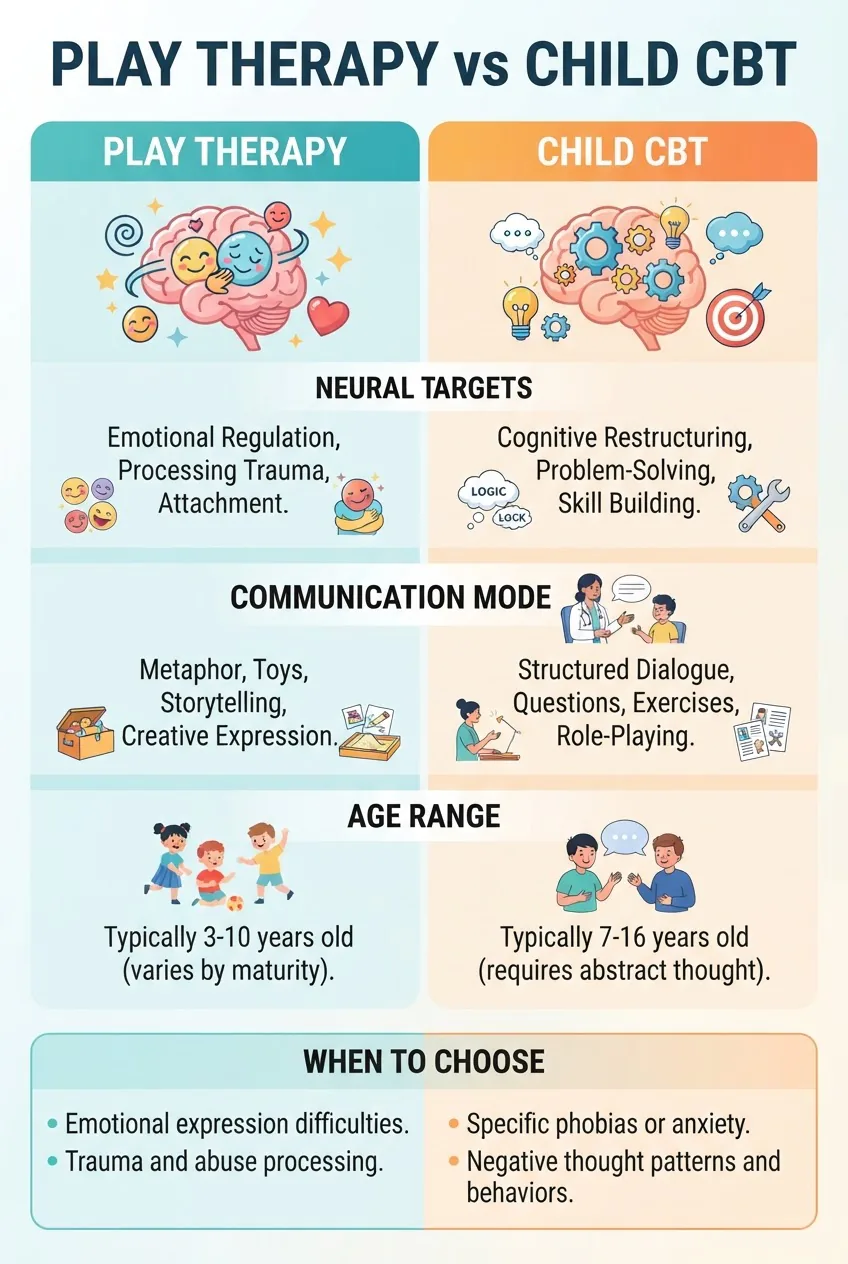
How Play Therapy Differs From Traditional Child CBT
| Parameter | Play Therapy Counseling | Traditional Child CBT |
|---|---|---|
| Primary neural targets | Limbic system and right‑hemisphere processing | Prefrontal cognitive control and verbal reasoning |
| Communication mode | Symbolic, sensory, metaphoric | Verbal, didactic, skill‑based |
| Typical age range | Preschool to middle childhood (roughly 3–12 years) | Often effective from later childhood through adolescence (10+ years) |
When to Seek Play Therapy: Clinical Indicators

Leading pediatric and trauma organizations recommend play therapy when children present with:
- Complex developmental trauma, especially that which occurred before verbal memory developed
- Selective mutism or anxiety disorders with significant nonverbal symptoms
- Regulatory difficulties that interfere with school or daily functioning
- Attachment challenges related to adoption, foster care, or disrupted caregiving that require dyadic repair
Additional practical indicators include sudden, persistent changes in play themes (recurrent themes of danger or helplessness), declines in classroom participation, intense separation distress beyond developmental norms, and caregiver–child interaction patterns that would benefit from corrective playful repair. If these signs are present, a referral to a clinician trained in play-based and trauma-informed assessment is appropriate.
3 Emerging Innovations in U.S. Practice
- NeuroPlay Therapy™: Integrates EEG biofeedback with play-based interventions to monitor and support regulation (examples of hospital‑based programs exist).
- Culturally responsive play tools: Multicultural dollhouses and materials designed to enhance cultural humility and representation in trauma work.
- Tele‑play protocols: HIPAA‑compliant virtual play therapy approaches that broaden access for rural and underserved families when in‑person services are limited.
These innovations aim to expand access, personalize interventions, and incorporate objective measures of regulation into play-based work. As with any new approach, careful evaluation and training are necessary to maintain ethical and effective practice.
Selecting Qualified Play Therapy Providers
When choosing a clinician, parents and referrers should verify relevant credentials and training. Helpful qualifications include:
- Registered Play Therapist (RPT) or RPT‑Supervisor (RPT‑S) certifications through APT
- Specialized training in DIR/Floortime, EMDR‑informed play approaches, or trauma‑focused play modalities
- Experience using early childhood diagnostic frameworks such as DC:0‑5™ when applicable
Practical questions to ask prospective providers include: What is your play therapy training and supervision history? How will caregivers be involved? How do you measure progress and when do you revisit goals? For telehealth, ask about technology platforms, activity adaptations, and privacy safeguards. These queries help families evaluate fit, expectations, and likely duration of services.
Clinical Efficacy and Outcome Considerations
Contemporary play therapy models are trauma‑informed and developmentally sequenced, aiming to engage children’s natural healing capacities through relationship and embodied experience. Outcome studies report meaningful improvements for anxiety and trauma symptoms in many pediatric samples; however, effectiveness varies by model, implementation fidelity, and individual factors.
When evaluating efficacy in routine care, clinicians and families should attend to three practical considerations: clearly defined, measurable treatment goals; use of standardized symptom or functioning measures when appropriate; and regular caregiver consultation to assess generalization of gains. These processes help translate research findings into predictable, individualized benefits.
FAQs: Evidence‑Based Play Therapy
1. What insurance codes commonly cover play therapy counseling?
Some U.S. insurers accept psychotherapy CPT codes (for example, 90837 for longer individual psychotherapy sessions) when services are provided by licensed clinicians who hold appropriate play therapy credentials. Reimbursement depends on the insurer, provider credentials, documented medical necessity, and state regulations.
2. How does child play therapy address trauma differently?
Play therapy facilitates processing of implicit and sensorimotor memories through symbolic, nonverbal experience rather than relying solely on explicit recall. This can reduce the risk of retraumatization while supporting regulatory and relational repair.
3. Can play therapy be adapted for neurodiverse children?
Yes. Models such as DIR/Floortime and sensory‑informed play strategies are commonly adapted for children on the autism spectrum and those with sensory processing differences, with attention to individualized sensory needs and communication styles.
U.S. Clinical Resources
- Association for Play Therapy: Evidence‑Based Practice Guidelines
- American Academy of Pediatrics
- National Child Traumatic Stress Network: Play Therapy Research
- Polyvagal Institute: Resources on Autonomic Regulation
- American Psychiatric Association: DSM‑5 Resources
Families considering play therapy may also coordinate with their pediatrician, school mental health staff, or child welfare worker to create a collaborative plan and ensure consistent supports across settings.
Conclusion: The Neurodevelopmental Value of Play
Play therapy is a developmentally aligned, trauma‑informed approach that leverages relational safety, sensory engagement, and symbolic expression to support emotional healing and regulation. When delivered by trained clinicians and integrated with family systems and developmental assessment, play‑based interventions provide empirically supported pathways to improved functioning for many children.
For those interested in a more approachable overview, Play therapy for children: a fun path to healing provides an engaging introduction to what to expect from a session.
If you’re exploring options for a child, start by discussing concerns with your pediatrician and asking potential providers about specific play therapy training, caregiver involvement, expected session frequency, and how progress will be tracked. Clear communication and shared goals increase the likelihood of meaningful, lasting change for the child and family.
Sorry, the comment form is closed at this time.