


30 May Filial Play Therapy: A Guide for Parents
Filial play therapy (FPT) is a parent-mediated, evidence-informed intervention designed to strengthen attachment through structured, play-based interactions. Unlike traditional play therapy led by clinicians, this child-centered approach trains caregivers to use therapeutic play skills that promote emotional co-regulation and secure attachment. This guide reviews core filial therapy protocols through the lens of attachment theory and contemporary developmental psychology, with attention to guidance from U.S.-based professional bodies such as the American Psychological Association and the Association for Play Therapy (APT).
This article gives parents practical steps, evidence highlights, and resources to decide whether filial play therapy fits their family’s needs and how to pursue training or services locally.
If you are a parent wondering whether FPT could help with common concerns — acting out, withdrawal, mood swings, or a child coping with a move, divorce, or loss — this guide outlines what to expect from training, how to find qualified supervision, and what outcomes have replicated across studies and program evaluations. It also offers practical tips for bringing short, regular play sessions into family routines and for adapting filial methods to cultural and logistical realities (work schedules, telehealth, and multi-caregiver households).
How Does Filial Play Therapy Differ From Standard Play Therapy?
Developed by Dr. Bernard Guerney at Rutgers University in the 1960s (not Virginia Axline, as is sometimes misattributed), filial therapy reframes the parent as the primary therapeutic agent. Whereas traditional play therapy is typically non-directive and clinic-based, FPT equips parents to conduct structured, child-centered play sessions at home under professional guidance. Many scholars describe this as creating a more continuous therapeutic environment that extends beyond the clinic into the child’s natural settings.
Key differentiators include:
- Parent as Therapeutic Agent: Caregivers are coached and supervised to deliver child-centered play sessions that support emotional and behavioral health goals.
- Naturalistic, Home-Based Practice: Sessions occur in familiar environments, which can enhance generalization of skills to daily life and routines.
- Prevention and Early Intervention: Filial programs are frequently used to strengthen attachment, build emotional skills, and reduce emerging behavior problems before they escalate.
Taken together, these features make filial play therapy especially useful for families who want therapeutic strategies embedded in daily routines rather than confined to occasional clinic visits. It also supports ongoing parent skill development that can generalize to multiple caregivers and settings.
What Are the Clinically Supported Benefits of Filial Therapy?
Decades of research on filial approaches and closely related models (such as Child-Parent Relationship Therapy, CPRT) indicate meaningful improvements across child, parent, and relationship outcomes. Meta-analytic and program evaluation findings suggest:
Across studies, common reported benefits include better emotional communication, more secure parent–child bonds, and reductions in behavior problems and parental stress. Outcomes depend on program fidelity, the degree of supervision, and the family context, but the trends are consistent enough that filial methods are widely recommended as a first-line, attachment-focused option for many families.
Many families report positive changes after starting filial play therapy. Discover more in our article about The Benefits of Filial Play Therapy for Families.
- Improved Emotional Literacy: Children often become more adept at identifying and expressing feelings; studies report gains in affect labeling and self-regulation skills. See research summaries from the Center for Play Therapy (UNT) and measures such as the Mayer–Salovey–Caruso Emotional Intelligence Test family of assessments.
- Attachment and Trauma Support: Adaptations of filial methods show promise for strengthening attachment and addressing trauma-related themes in populations such as children in foster care; see the Child Welfare Information Gateway for trauma resources.
- Increased Parental Confidence: Parents commonly report higher self-efficacy in emotion coaching, limit setting, and responding to challenging behaviors after training and supervised practice.
While specific outcomes can vary with program fidelity, population, and duration, consistent themes across the literature are improved parent–child attunement, better emotion communication, and more positive parent reports of behavior and relationship quality.
Which Filial Therapy Techniques Yield Optimal Results?
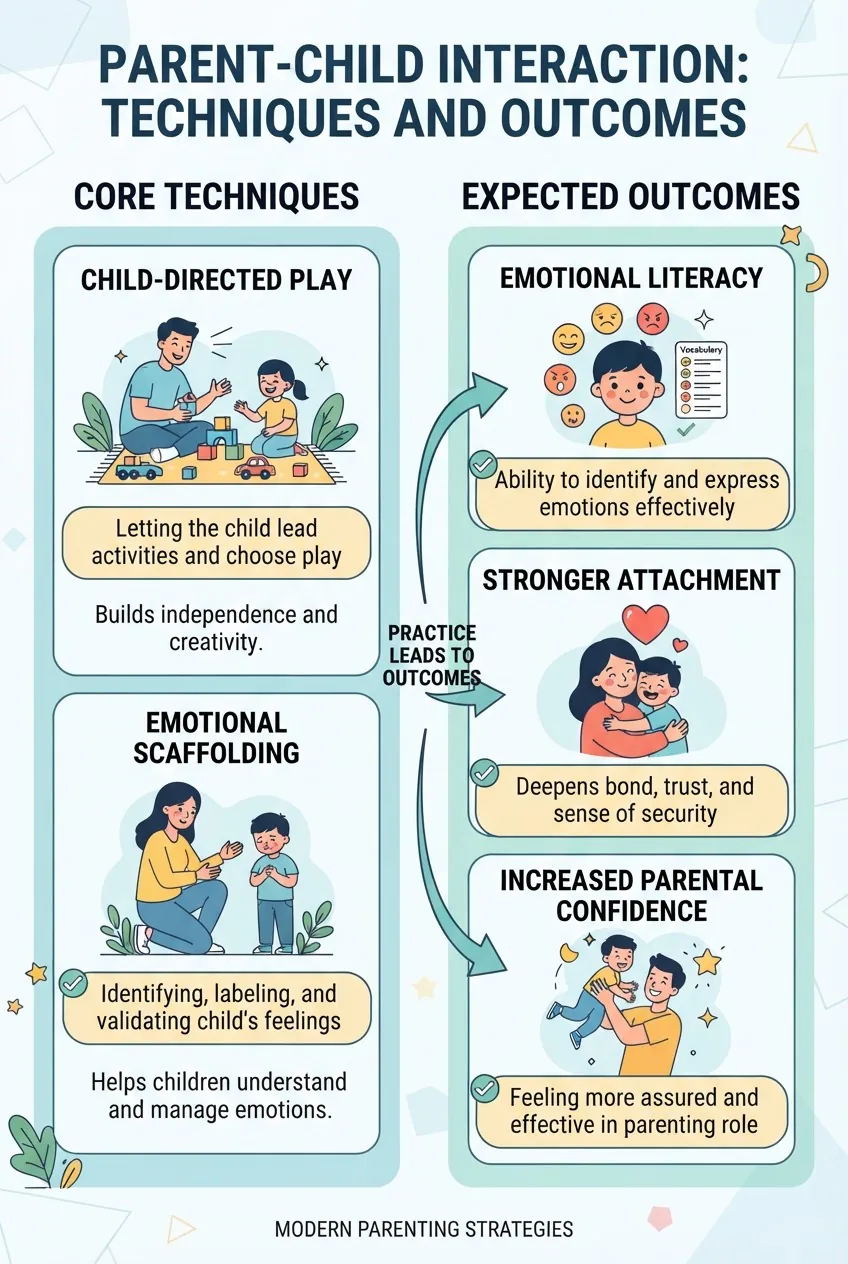
Many filial models share a set of core, research-aligned practices. Two widely used components include:
1. Child-Directed Play Sessions
Grounded in Guerney’s child-centered framework, parents learn to:
- Use empathic tracking statements to mirror the child’s play (e.g., “You’re building a tall tower”) rather than directing it.
- Favor descriptive feedback over evaluative praise to reduce performance pressure and encourage autonomy.
- Set limits only for safety or essential boundaries using Landreth’s ACT approach: Acknowledge the feeling, Communicate the limit, Target an acceptable alternative.
Parents often find that practicing short, regular child-led sessions builds trust and gives children safe space to explore feelings indirectly through symbols and stories in play.
2. Emotional Scaffolding
Parents are coached to label and validate emotions and to connect play themes to everyday experiences. Many programs draw on Landreth’s ACT model and incorporate simple emotional-awareness tools (for example, “feelings faces” or mood meters such as those used in the RULER framework) to help children build a richer vocabulary for internal states.
Over time, emotional scaffolding helps children practice name-and-regulate steps in a low-pressure context, increasing their capacity for self-soothing and problem-solving with parental support.
How Can U.S. Parents Implement Evidence-Based Filial Therapy?
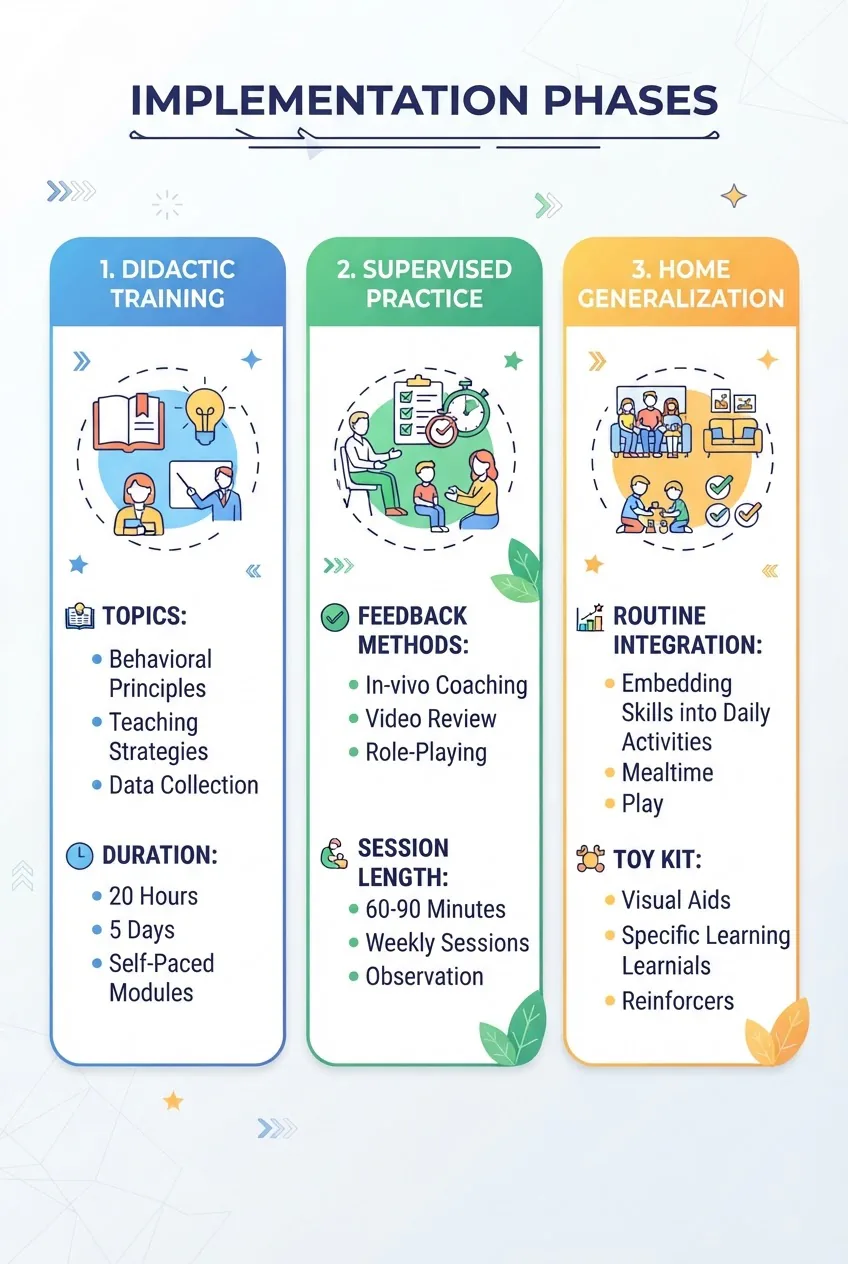
Implementation typically unfolds in phases, often aligned with APT-endorsed training pathways and university-affiliated programs (e.g., CPRT at the Center for Play Therapy, University of North Texas):
- Didactic Training: Parents complete structured education modules covering child-centered principles, play session structure, limit setting, and empathy skills.
- Supervised Practice: Caregivers conduct brief play sessions while receiving live or video-based feedback from licensed clinicians trained in filial methods.
- Home Generalization: Families transition to consistent, weekly 30-minute child-led play sessions at home, using a simple toy set that supports expression (open-ended figures, art supplies, construction materials, and pretend-play items).
Practical tips for families: schedule sessions at similar times each week, choose a small set of open-ended toys, keep sessions brief and focused, and track changes in the child’s play themes or emotion labeling over several weeks. Consistent practice and clinician feedback are key to skill growth.
When telehealth supervision is used, clinicians can review recorded play sessions or observe live, offering the same corrective coaching and reinforcement that occurs in-person. Before beginning, confirm privacy and consent procedures with your provider and discuss how many supervised sessions are included in the program fee.
To find qualified professionals and training options, consult the Association for Play Therapy and state licensing boards, or search university-based play therapy centers.

What Challenges Emerge in Clinical Filial Therapy Applications?
Common hurdles include:
- Shifting to a Non-Directive Stance: Many caregivers initially find it difficult to follow the child’s lead and avoid teaching, correcting, or problem-solving during play. Structured coaching and feedback help this become more natural.
- Cultural Responsiveness: Effective filial work adapts language, materials, and rituals to fit family values and community norms. The APA’s child and family divisions emphasize tailoring interventions to cultural context; see APA family resources.
Clinical teams can address these hurdles by normalizing early mistakes, using role-play in training, offering translated materials where needed, and co-creating session rituals that reflect family strengths and cultural norms.
Additional practical strategies include offering brief booster sessions for parents who struggle to maintain consistency, creating visual schedules for children to anticipate play time, and involving other caregivers (teachers, grandparents) in orientation sessions to promote consistency across settings. Programs that pair didactic modules with hands-on coaching tend to show stronger maintenance of skills over time.
Conclusion: The Future of Filial Play Therapy in U.S. Family Systems
Filial play therapy is a practical, relationally focused approach that brings therapeutic change into daily life by empowering caregivers. With the growth of high-quality telehealth and supervision options through organizations like the APA’s telehealth resources, FPT is well positioned to support families seeking accessible, attachment-focused care. If you’re considering this approach in your area, check out our resource on Finding Filial Play Therapy Services in Fort Worth.
If you want to explore next steps, consider contacting a local APT-affiliated clinician or university center for an initial consultation about program fit, training schedules, and whether a short-term trial of filial sessions might be appropriate for your child and family.
When evaluating programs, ask about: the number of supervised sessions included, clinician credentials and experience with filial models, how progress is tracked, and whether the program offers culturally adapted materials or parent groups. A brief trial and review with the clinician after four to six weeks can help you determine fit before committing to a longer course.
FAQs: Evidence-Based Answers About Filial Play Therapy
1. How does filial therapy’s efficacy compare to PCIT?
Both FPT and Parent–Child Interaction Therapy (PCIT) are effective parent–child interventions. PCIT emphasizes structured behavior management and live coaching, while FPT prioritizes emotional attunement through child-led play. Comparative outcomes vary by population and goals; both have strong evidence bases. Learn more about PCIT at PCIT International.
2. What toy kits are appropriate for home sessions?
A basic filial kit focuses on open-ended, non-electronic materials that invite expression and storytelling, such as:
- People/animal figures, dolls, puppets, and pretend-play items
- Art supplies (crayons, markers, clay/putty)
- Blocks/building materials and simple vehicles
For general guidance, see the APT’s play therapy overview and university program resources like UNT’s Center for Play Therapy.
3. Are there Medicaid-covered filial therapy providers?
Coverage varies by state. Under Medicaid’s EPSDT benefit, medically necessary behavioral health services for children may include parent-mediated interventions. Check your state’s Medicaid manual or contact your plan for specifics.
References: Selected U.S.-Based Resources on Filial and Child-Centered Play Therapy
- Bratton, S. C., Ray, D., Rhine, T., & Jones, L. (2005). The efficacy of play therapy with children: A meta-analytic review. Journal of Counseling & Development, 83(2), 196–211.
- American Psychological Association: Play Therapy Overview
- Association for Play Therapy (professional standards, training, and resources)
- Center for Play Therapy, University of North Texas (research and training in Child-Parent Relationship Therapy/filial methods)
Sorry, the comment form is closed at this time.