


01 Jun Adult Counseling in Fort Worth — What to Expect & Benefits
Overview: Adult Counseling in Fort Worth
If you’re exploring adult counseling options in Fort Worth, this guide outlines who can benefit, what a typical therapeutic process looks like, and how local clinicians tailor care to adults’ daily lives. It is meant to help you prepare for your first step toward improved wellbeing.

Adult counseling in Fort Worth provides a welcoming, evidence-based space designed to help adults navigate life’s challenges. Whether you are managing anxiety, depression, relationship issues, grief, trauma, or major life transitions, local therapists offer client-centered care paired with clinical expertise. You’ll find both brief, solution-focused therapy and comprehensive, ongoing support options.

Many Fort Worth therapists blend Cognitive Behavioral Therapy (CBT) with strengths-based and person-centered approaches, ensuring you receive care tailored to your goals. Explore the common issues addressed in adult counseling.
- Main LSI keywords: adult therapist, anxiety counseling, depression therapy, relationship counseling, stress management, coping skills, self-esteem, trauma recovery
How Does Adult Counseling Address Unique Needs in Fort Worth?
In Fort Worth, adult counseling is attuned to diverse lifestyles and cultural contexts. Therapists conduct comprehensive biopsychosocial assessments during your initial sessions, evaluating influences from fast-paced workplaces, family responsibilities, local culture, and community dynamics.
Most adult therapists are licensed by the Texas Behavioral Health Executive Council and often utilize trauma-informed and multicultural principles to build rapport and trust. Expect the process to involve active listening, collaborative goal-setting, and ongoing feedback.
In addition, many local clinicians partner with community resources—support groups, faith-based organizations, and healthcare providers—to create a coordinated plan when social supports, medical needs, or legal concerns are part of the picture. This community-aware approach helps therapists tailor realistic, culturally responsive interventions.
You may also find bilingual services, clinicians with experience working with military families, and offices located near major transit corridors—factors that improve access and convenience for Fort Worth residents.
- Main LSI keywords: multicultural therapy Fort Worth, trauma-informed care, individualised therapy plans, local therapist, adult mental health, urban stressors
Types of Adult Therapy Available in Fort Worth
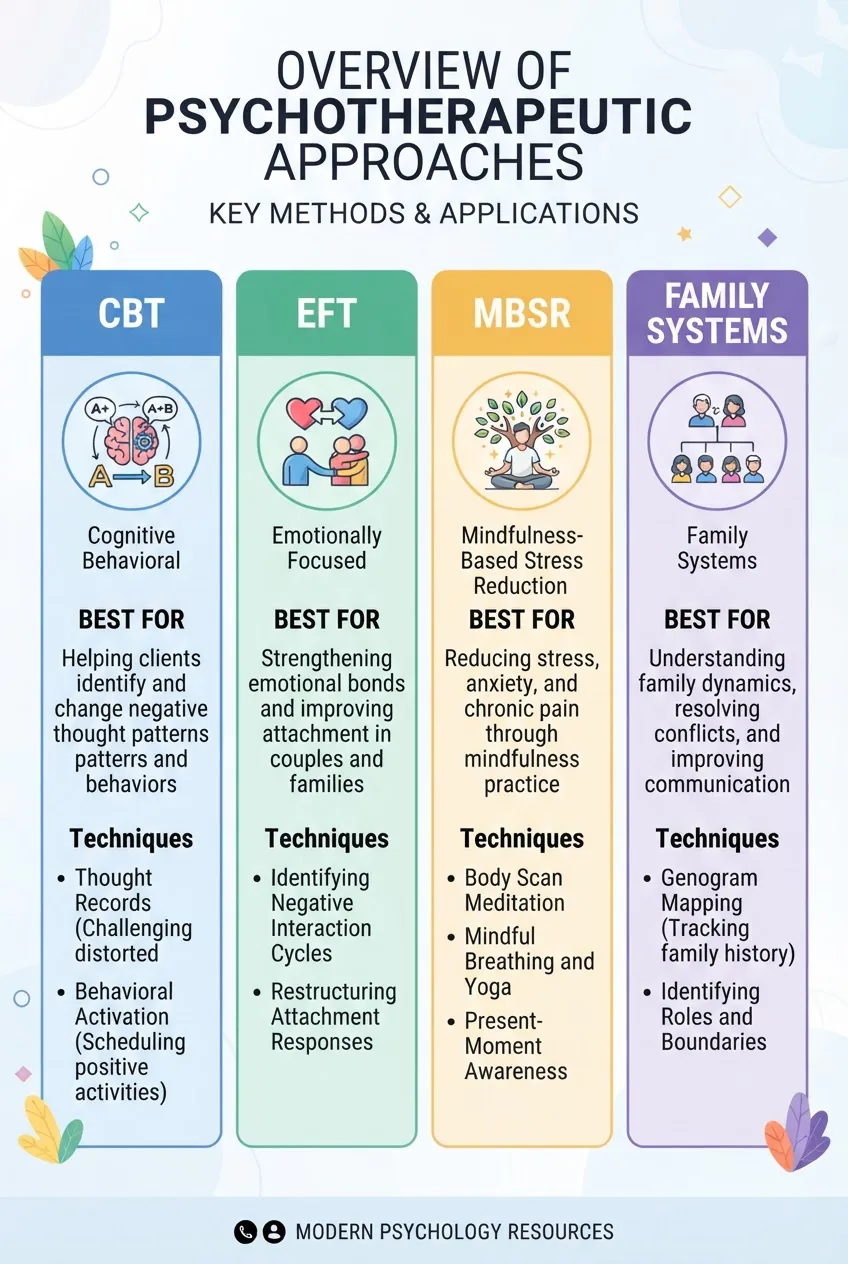
Fort Worth offers a comprehensive array of evidence-based therapy modalities designed for adults. Therapists choose the best-fit model according to your needs and preferences, always using research-backed approaches to maximise results.
| Therapy Type | Best For | Key Features | Example Techniques |
|---|---|---|---|
| Cognitive Behavioral Therapy (CBT) | Anxiety, depression, stress | Time-limited, structured, skills-based | Thought records, behavioural experiments |
| Emotionally Focused Therapy (EFT) | Relationships, attachment wounds | Emotion processing, attachment repair | Cycle de-escalation, bonding conversations |
| Mindfulness-Based Stress Reduction (MBSR) | Stress, chronic pain, emotional regulation | Mindfulness, meditation, psychoeducation | Breathwork, body scan, mindful awareness |
| Family Systems Therapy | Family conflict, communication issues | Systemic focus, generational patterns | Genograms, communication coaching |
Beyond these core modalities, many practices in Fort Worth provide group therapy, grief counseling, acceptance and commitment therapy (ACT), DBT skills training, and combined approaches that integrate mindfulness and somatic work. Telehealth makes several of these options more accessible for busy schedules and outlying neighborhoods.
Group programs often run for a fixed number of weeks (for example, 8–12 weeks) and can be a cost-effective way to build skills while connecting with peers facing similar challenges.
- Main LSI keywords: cognitive behavioural therapy, mindfulness, attachment therapy, family therapy, group counseling, psychoeducation
What to Expect from Adult Counseling in Fort Worth
Structured Initial Consultation
Your journey begins with a first appointment involving assessment tools such as the PHQ-9 and GAD-7, clinical interviews, and a collaborative discussion of your treatment goals. Learn more about the screening tools used by Fort Worth therapists.

Goal-Setting and Treatment Planning
Therapists use the SMART framework (Specific, Measurable, Achievable, Relevant, Time-bound) to turn your goals into actionable steps. For example: “Reduce panic attacks by 50% in 8 weeks using grounding exercises.” Read more about SMART objectives for therapy.
Ongoing Support and Progress Monitoring
Sessions are typically biweekly and include regular check-ins using outcome measures (like the OQ-45). Therapists adjust plans as needed to ensure your progress continues. Strategies such as exposure therapy may be introduced for specific issues like phobias or trauma.
Expect to complete intake paperwork and consent forms before or during the first visit; your clinician will review confidentiality, limits to confidentiality (such as duty to warn), and an emergency plan. This helps set clear expectations and ensures your safety throughout care.
Most in-person therapy sessions are scheduled for about 50 minutes; teletherapy sessions often follow the same cadence. Discuss session length, frequency, and fee structure during your initial consultation so cost and logistics match your needs.
- Main LSI keywords: assessment session, goal-setting, outcome monitoring, treatment plan, therapy timeline, progress evaluation
How Adult Counseling Improves Mental Health Outcomes
Research consistently finds that adult counseling leads to meaningful, lasting changes in mental health and life satisfaction. Benefits often include:
- Reduced symptoms of anxiety and depression
- Improved emotional regulation and focus
- Better relationship satisfaction and communication
- Greater self-confidence and life satisfaction
Expert Insight: “Tailored, evidence-based therapy helps adults build resilience, manage stress, and achieve life goals—empowering them to thrive in today’s world.” — Licensed Professional Counselor, Fort Worth
Therapists monitor outcomes using standardized measures and session feedback to determine when to intensify, change, or taper treatment. This collaborative tracking helps ensure therapy stays aligned with your changing needs and yields measurable improvements.
Many clients notice initial improvements in mood, sleep, or coping within a few sessions, while deeper, more lasting change often builds over weeks to months depending on the issue and treatment plan.
- Main LSI keywords: therapy benefits, mental wellness, resilience, symptom reduction, relationship improvement
How to Choose the Right Fort Worth Therapist for Adult Counseling
Finding the right therapist is crucial for success. Here are factors to consider, based on guidelines from the American Counseling Association:
- Specialization: For complex trauma, select LPC-Supervisors or therapists with advanced trauma credentials. For marriage or family issues, seek LMFTs.
- Therapy Fit: Compare modalities (skills-focused like DBT versus insight-oriented psychodynamic) to align with your comfort and needs.
- Telehealth Options: Many Fort Worth therapists offer secure virtual or hybrid sessions for greater flexibility.
| Therapist Type | Best For | Credentials |
|---|---|---|
| LPC-S / LPC | Individual issues, trauma, stress, anxiety, depression | MS/MA, State Licensed, Supervisor Credential for LPC-S |
| LMFT | Couple/family therapy, communication, relationship issues | MS/MA, State Licensed in Marriage and Family Therapy |
| LCSW | Life transitions, social stress, support networks | MSW, State Licensed Clinical Social Worker |
Tip: Always verify a clinician’s license status with the Texas Behavioral Health Executive Council.
Local Resources: The Fort Worth Counseling & Intervention Center and the Texas Health Resources provider network.
When you contact potential therapists, consider scheduling a brief consultation call to ask about approach, fees, insurance, availability, and whether they offer sliding-scale rates or payment plans. This conversation often clarifies fit before you commit to a full session.

Also ask whether the practice uses a HIPAA-compliant telehealth platform and how they handle cancellations, emergencies, and coordination with other providers—these practical details reduce surprises and protect your care continuity.
- Main LSI keywords: therapist near me, credentials, licensed counselor Texas, teletherapy options, evidence-based therapist, choosing a therapist
Frequently Asked Questions About Adult Counseling
How long does adult therapy typically last in Fort Worth?
For moderate anxiety or depression, most clients complete 12–16 sessions (as recommended by the American Psychological Association). Complex or persistent issues may require extended therapy.
Can adult counseling help with workplace stress?
Absolutely. Many Fort Worth therapists deliver skills-based, occupationally focused CBT tailored to burnout and job stress, in line with national standards for work-related mental health support.
Is my information confidential in counseling sessions?
Yes. All licensed therapists in Fort Worth adhere to strict confidentiality and privacy laws, ensuring your personal and health information remains protected.
Are teletherapy and in-person sessions available?
Most Fort Worth providers offer both teletherapy and traditional in-person counseling to suit your preferences and schedule.
How do I know if an adult therapist is right for me?
You should feel comfortable, heard, and respected. Trust your instincts during initial sessions, and discuss your preferences or concerns openly with your therapist.
- Main LSI keywords: therapy duration, workplace mental health, confidentiality, telehealth counseling, therapist-client fit
Definition Box: Key Adult Counseling Terms
- SMART Goals: Specific, Measurable, Achievable, Relevant, Time-bound objectives guiding your therapy process.
- CBT (Cognitive Behavioral Therapy): A form of talk therapy targeting harmful thoughts and behaviours.
- Outcome Measures: Tools like OQ-45 that track your symptoms and progress in therapy over time.
- Multicultural Therapy: Approaches that respect and adapt to diverse cultural identities and backgrounds.
- PHQ-9/GAD-7: Standardised screening questionnaires for depression and anxiety, respectively.
- DBT (Dialectical Behavior Therapy): A skills-based therapy effective for emotion regulation and interpersonal effectiveness.
People Also Ask
Q: What’s the difference between a psychologist, therapist, and counselor?
Q: Can therapy sessions be covered by insurance in Fort Worth?
Q: How do I prepare for my first adult counseling session?
- Main LSI keywords: reasons for counseling, psychologist vs therapist, insurance for therapy, first session tips
Conclusion: The Benefits of Specialized Adult Counseling in Fort Worth
Adult counseling in Fort Worth expertly combines scientific knowledge and compassionate support to foster growth, resilience, and wellbeing. Whether you’re seeking short-term skills or deeper self-exploration, the right therapist will help you transform challenges into opportunities for positive change.
Many clients report greater clarity, reduced distress, and improved relationships after just a few sessions. Read more about the benefits of adult counseling for mental health.
Fort Worth’s wide range of licensed, experienced counselors makes it easier than ever to find the right match for your needs. For more information, consider visiting the American Psychological Association or NAMI Texas for local listings and support.
Ready to get started? Consider booking a brief consultation to ask about approach, fees, and scheduling — many practices offer an initial phone or video call to help you decide if a clinician is the right fit. Taking this first step can quickly connect you with the support you need.
How long does adult therapy typically last in Fort Worth?
For moderate anxiety or depression, most clients complete 12–16 sessions (as recommended by the American Psychological Association). Complex or persistent issues may require extended therapy.
Can adult counseling help with workplace stress?
Absolutely. Many Fort Worth therapists deliver skills-based, occupationally focused CBT tailored to burnout and job stress, in line with national standards for work-related mental health support.
Is my information confidential in counseling sessions?
Yes. All licensed therapists in Fort Worth adhere to strict confidentiality and privacy laws, ensuring your personal and health information remains protected.
Are teletherapy and in-person sessions available?
Most Fort Worth providers offer both teletherapy and traditional in-person counseling to suit your preferences and schedule.
How do I know if an adult therapist is right for me?
You should feel comfortable, heard, and respected. Trust your instincts during initial sessions, and discuss your preferences or concerns openly with your therapist.
Sorry, the comment form is closed at this time.