


28 May Family Play Therapy: Strengthening Bonds Through Play
Family play therapy (FPT) is an evidence-based therapeutic approach that strengthens attachment bonds through structured, play-based interactions. By integrating both directive and non-directive play techniques into a family systems framework, FPT creates a developmentally appropriate space for nonverbal emotional expression and problem-solving. In Fort Worth, Texas, licensed clinicians increasingly use family play therapy to address DSM-5-aligned relational concerns while promoting secure, resilient family functioning.
This hands-on modality supports families across the lifespan — from young children to adolescents — by meeting developmental needs where words alone aren’t enough. It can be used as a primary intervention or integrated with other treatments to target attachment wounds, regulation skills, and family communication patterns. Families often appreciate the practical, observable changes in interaction that emerge in early sessions.
How Does Family Play Therapy Differ From Traditional Family Counseling?
Family play therapy specialists in Fort Worth apply Axline’s child-centered play principles within a systemic lens, rather than relying solely on talk therapy. Research published in the Journal of Marital and Family Therapy (2023) indicates that play-based interventions can substantially improve family communication patterns compared to verbal-only approaches.
While play-based interventions offer a unique approach, some families may wonder how these compare to other methods. For a detailed breakdown, explore Family Play Therapy vs. Traditional Family Counseling and see which approach may be the best fit.
Through therapist-facilitated play scenarios, families participate in attachment-building activities that surface intergenerational dynamics and unspoken patterns. Local practitioners also report that filial therapy strategies are especially useful for military families navigating reintegration stress.
Clinicians typically tailor FPT to each family’s goals and developmental stage, clarifying roles and expected outcomes during intake. This individualized planning helps set measurable targets — such as increased positive interactions per session or reduced conflict escalation — which can be tracked across treatment.
What Are the Measurable Benefits of Play Therapy for Families?
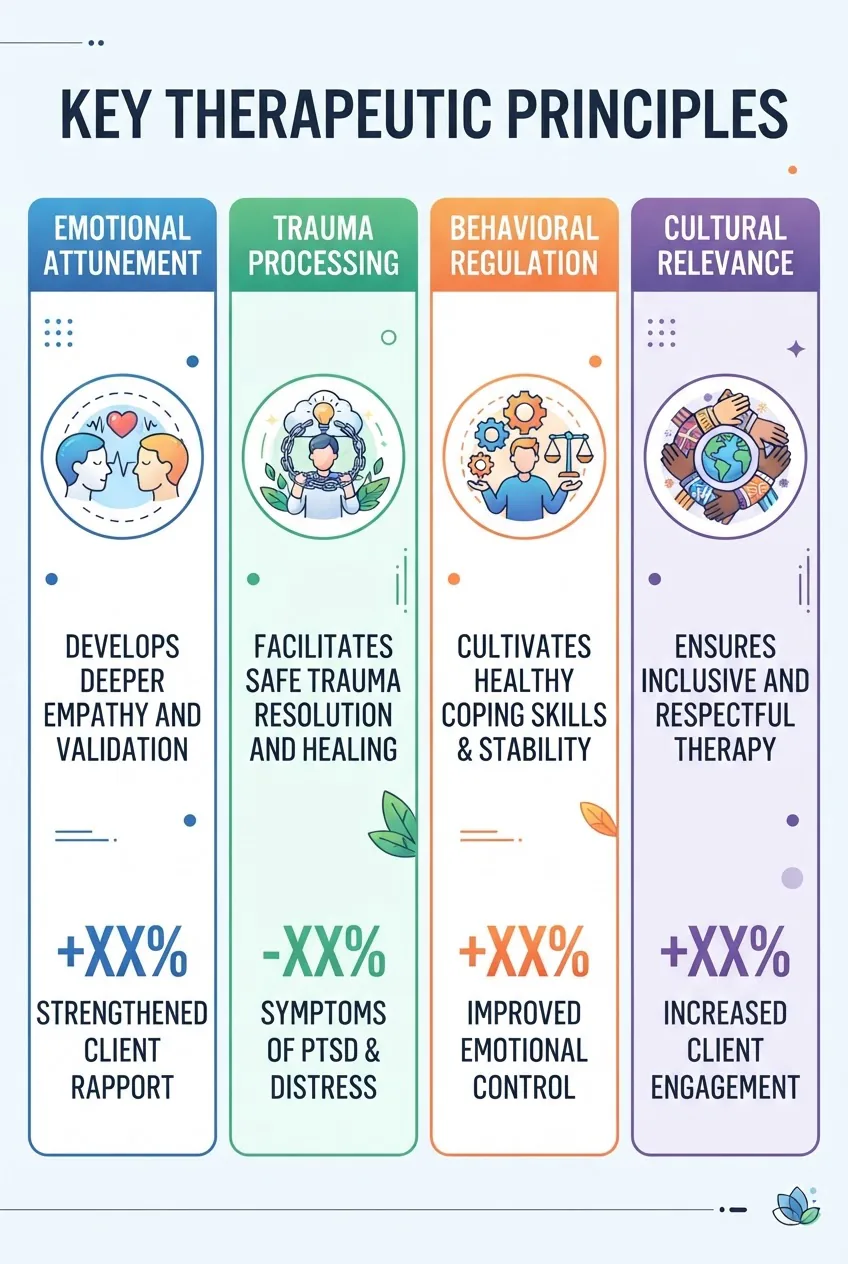
Clinical findings referenced by Texas Christian University’s family therapy community highlight:
- Enhanced Emotional Attunement: Co-regulatory play is associated with significant gains in parent–child synchrony (see Journal of Child and Family Studies, 2023)
- Trauma Processing: Sandtray and other expressive family modalities help integrate implicit memories related to adverse childhood experiences (ACEs). For background on ACEs, visit the CDC’s ACEs resource.
- Behavioral Regulation: Structured, play-based limit-setting can reduce oppositional behaviors in clinical settings.
- Cultural Relevance: Fort Worth therapists frequently adapt interventions for Hispanic and African American family structures in alignment with the APA’s Multicultural Guidelines.
Providers who use standardized outcome measures — such as parent-report scales, observational coding of interactions, and goal-attainment scaling — can provide families with clear evidence of progress over time. Ask prospective clinicians which tools they use to track change.
Which Family Therapy With Play Techniques Show Highest Efficacy in Fort Worth?
Several empirically supported play-based models are in use locally; the following are among the most recognized within regional clinical training programs and pediatric behavioral health services.
1. Theraplay-Informed Family Sessions
Cook Children’s Child Study Center in Fort Worth incorporates this attachment-focused modality, using structured reciprocity games to model healthy caregiver–child interactions. Learn more about Theraplay at the Theraplay Institute. Explore local services at the Cook Children’s Child Study Center.
2. Trauma-Informed Family Puppet Therapy
At the University of Texas at Arlington, training and clinical communities emphasize the use of metaphor and storytelling to process relational trauma in developmentally sensitive ways. For context on UTA’s clinical education, visit the UT Arlington School of Social Work.
3. Adlerian Family Play Groups
Available through major pediatric behavioral health providers in Fort Worth, these groups address sibling dynamics and family roles through encouragement-focused play activities. For regional offerings, see Cook Children’s Medical Center.
How to Access Quality Family Play Therapy Fort Worth Services
When seeking play therapy for families in Fort Worth:
- Verify RPT-S (Registered Play Therapist–Supervisor) or related credentials through the Association for Play Therapy.
- Ask about cultural adaptation training relevant to North Texas communities (for example, alignment with the APA’s Multicultural Guidelines).
- Request structured family play observations and outcome measures as part of treatment planning.
Other practical tips: inquire about insurance reimbursement, sliding-scale options, and whether clinicians offer blended in-person and telehealth sessions for check-ins or parent consultations. A clear intake that outlines goals and measurement increases the likelihood of meaningful outcomes.
Debunking Myths About Family Play Therapy
Common misconceptions can keep families from choosing play-based approaches. Below we address frequent concerns and clarify when and how play therapy is clinically applied.
- “Play lacks clinical rigor”: Neuroimaging research from institutions such as UT Southwestern’s O’Donnell Brain Institute underscores how experiential engagement can activate social cognition and mirror systems in ways that complement verbal processing.
- “Only for young children”: Adolescent family play therapy often incorporates collaborative game design, creative problem-solving, and experiential challenges to reduce resistance and increase buy-in.
- “Not for severe issues”: Play-based adaptations are used alongside evidence-based trauma treatments; for example, EMDR approaches can be integrated developmentally in family contexts. See practitioner resources via EMDR International Association (EMDRIA).
Frequently Asked Questions
What makes Fort Worth family play therapy unique?
Clinicians in Fort Worth often integrate Texas cultural elements into treatment plans—such as ranch-inspired animal-assisted activities and rodeo-themed role-play—while maintaining fidelity to evidence-based protocols.
How long does family therapy with play typically last?
Most clinics recommend 12–16 weekly sessions, sequenced developmentally to support attachment, regulation, and communication skills. Duration may vary based on goals, diagnosis, and family readiness.
Where can I find evidence-based play therapy for families in Fort Worth?
The Texas Association for Play Therapy provides resources and regional updates. Start with the state chapter at Texas APT or search the national provider directory through the Association for Play Therapy.
Conclusion: The Fort Worth Advantage in Family Play Therapy
Family play therapy in Fort Worth brings together rigorous play therapy training, family systems expertise, and cultural responsiveness unique to North Texas. Regionally adapted strategies informed by local research communities, including TCU’s Harris College, are associated with stronger outcomes than standardized, one-size-fits-all protocols. Explore TCU’s health and human services programs at Harris College of Nursing & Health Sciences.
If you’re considering services, compile a short list of priorities (e.g., trauma focus, parent coaching, sibling work) before contacting clinicians; this helps match families with therapists who use the methods and outcome measures that matter most to them.
Ready to take the next step? Learn more about finding services in Fort Worth for your family.
North Texas Research References
- University of North Texas (2023). Cultural Adaptations of Play Therapy for DFW Families. Learn more about UNT at unt.edu.
- Cook Children’s Hospital (2022). Neurodevelopmental Outcomes of Family Play Therapy. See programs at cookchildrens.org.
- Fort Worth Psychological Association (2023). Best Practices in Family Play Therapy.
Sorry, the comment form is closed at this time.